Select Games to Compare

search close
search close

Select up to 2 games to compare side-by-side.

Marathon vs DOOM Eternal

close close
info General Information
Release Date
Dec 9, 2025 Mar 20, 2020
Developer
Bungie id Software
Publisher
Bungie Bethesda Softworks
Genre(s)
PvPvE Extraction Shooter First-Person Shooter, Action, Platformer
Engine
Tiger Engine (Modified) id Tech 7
stars Ratings & Price
Content Rating
Mature Mature 17+
Avg. User Rating
4.7 / 5.0 4.6 / 5.0
Current Price (USD)
Free $39.99
tune Key Specs
Quick Highlights
  • Match Duration: 20 Minutes (Max)
  • Team Size: 1-3 Players
  • Time-to-Kill (TTK): Very Fast / Lethal
  • Weapon Count: 28 Base Platforms
  • Wipe Cycle: 90 Days (Seasonal)
  • Perspective: First-Person
  • Multiplayer: BATTLEMODE (2v1 Asymmetrical PvP), Horde Mode (Single-Player)
  • Setting: Earth, Hell, Urdak, Sentinel Prime, Various Dimensions
  • Platforms: PC, PlayStation 4, PlayStation 5, Xbox One, Xbox Series X|S, Nintendo Switch, Google Stadia (discontinued)
  • Unique Feature: Aggressive Push-Forward Combat, Resource Management via Glory Kills/Chainsaw/Flame Belch, Advanced Traversal (Dash, Meathook), Deep Lore Expansion, Master Levels.
sports_esports Gameplay & Mechanics
Companions/Followers
  • Pickpocket Drone: Stealing items from enemies/world
    Robot
  • Tracker Drone: Enemy detection and detonation
    Robot
  • None (Gameplay): The Doom Slayer fights entirely alone during the single-player campaign. There are no AI companions that directly assist in combat.
  • VEGA (Guidance/Narrative): While not a combat companion, VEGA provides crucial mission information, manages the Fortress of Doom, and contributes significantly to the narrative and lore exposition.
    AI
Key Collectibles
  • Schema: High-tier loot containers / Boss drops
  • Lockbox Key: Purchasable or found in world
  • Toys (Vinyl Figurines): Small, hidden collectible figures representing various demons, characters, and items from the Doom universe. Each level typically has 2-3 toys hidden in secret areas.
  • Codex Pages: Lore entries found throughout levels that expand on the game's universe, characters, demons, locations, weapons, and the history of the Sentinels, Maykrs, and Hell. Essential for understanding the deeper narrative.
  • Albums (Music Discs): Hidden collectible records featuring music tracks from previous id Software games (like classic Doom, Quake, Wolfenstein) and some original tracks. These can be listened to in the Doom Slayer's room in the Fortress of Doom.
  • Cheat Codes: Floppy disk-like items hidden in levels that unlock various cheat codes (e.g., infinite ammo, all runes, specific suit modes). Once found, cheats can be enabled when replaying missions but disable Slayer Gate access.
  • Praetor Suit Points: Tokens carried by ghostly Sentinel guards or found in caches. Used to upgrade the Praetor Suit's abilities and systems.
  • Sentinel Crystals: Crystals that allow the Slayer to choose between upgrading maximum Health, Armor, or Ammunition capacity. Unlocking both linked upgrades on a crystal grants an additional passive perk.
  • Empyrean Keys: Earned by completing challenging Slayer Gates (optional combat encounters with high difficulty). Used in the Fortress of Doom to unlock the Unmaykr weapon.
  • Sentinel Batteries: Power sources found in levels or earned from completing mission challenges. Used in the Fortress of Doom to unlock rooms containing collectibles like Praetor Suit Points, Runes, or cosmetic skins.
Key Themes
  • Cyberpunk
  • Sci-Fi
  • Survival
  • Mystery
  • Transhumanism
  • Demonic Invasion
  • Saving Humanity
  • Hell on Earth
  • Interdimensional Warfare
  • Ancient Alien Civilizations (Sentinels & Maykrs)
  • The Doom Slayer's Rage
  • Apocalyptic Power
  • Resource Management
  • Fast-Paced Combat
  • Lore Expansion
colorize Combat & Gear
Weapons Overview
  • WSTR: Combat Shotgun
    Double-barreled close-quarters weapon. Can be modded for 3-shot bursts.
  • Ares RG: Railgun
    High wind-up, high-damage weapon capable of one-shotting fully shielded Runners.
  • BRRT: SMG
    Five-shot burst weapon that eliminates recoil bloom.
  • Combat Shotgun (Mods: Sticky Bombs, Full Auto): Shotgun (Versatile)
    A reliable early-game shotgun. Sticky Bombs provide ranged explosive capabilities, while Full Auto turns it into a rapid-fire close-quarters weapon.
  • Heavy Cannon (Mods: Precision Bolt, Micro Missiles): Assault Rifle (Precision/Burst)
    A versatile automatic rifle. Precision Bolt offers a scoped, high-damage single shot, while Micro Missiles launch a volley of small rockets.
  • Plasma Rifle (Mods: Heat Blast, Microwave Beam): Energy Rifle (Sustained/Focused Damage)
    Fires rapid plasma projectiles. Heat Blast unleashes a shockwave after sustained fire. Microwave Beam locks onto and stuns enemies, eventually causing them to explode.
  • Rocket Launcher (Mods: Remote Detonate, Lock-On Burst): Explosive Launcher (Area/Focused Damage)
    Fires powerful rockets. Remote Detonate allows manual explosion. Lock-On Burst fires a three-rocket salvo at a targeted enemy.
  • Super Shotgun (Meathook): Shotgun (Close Range, Mobility)
    Iconic double-barreled shotgun with immense close-range damage. The Meathook attachment allows the Slayer to grapple onto enemies, pulling himself towards them or setting them on fire.
  • Ballista (Mods: Arbalest, Destroyer Blade): Energy Projectile (Heavy Damage/Utility)
    Fires a powerful energy bolt. Arbalest charges a high-damage explosive shot. Destroyer Blade launches a wide, short-range energy wave that can clear groups.
  • Chaingun (Mods: Mobile Turret, Energy Shield): Automatic Firearm (High Rate of Fire)
    A gatling-style weapon. Mobile Turret deploys four barrels for devastating sustained fire (at the cost of movement). Energy Shield provides frontal protection while firing.
  • BFG-9000: Ultimate Weapon (Area Clearing)
    Fires a large plasma orb that tethers to and damages multiple enemies in a wide area. Extremely powerful with limited ammunition.
  • Unmaykr: Ultimate Weapon (Focused Energy Barrage)
    An ancient Sentinel weapon unlocked using Empyrean Keys. Fires a rapid spread of energy projectiles, sharing ammo with the BFG. More focused damage than the BFG.
  • Crucible: Melee (Ultimate Blade)
    A powerful Sentinel energy sword capable of instantly killing most standard demons with a single strike. Has limited charges replenished by finding Crucible pickups.
  • Doomblade: Melee (Integrated Arm Blade)
    The Slayer's retractable arm blade, primarily used for Glory Kills and Blood Punch attacks.
  • Chainsaw: Utility/Melee (Ammo Generation)
    Instantly kills most demons (except Super Heavy) and causes them to drop a large amount of ammunition. Requires fuel, which recharges over time or via pickups.
  • Equipment Launcher (Frag Grenade, Ice Bomb): Shoulder-Mounted Utility
    Allows the Slayer to fire Frag Grenades for area damage or Ice Bombs to freeze enemies, making them vulnerable or easier to manage. Upgradable.
  • Flame Belch: Shoulder-Mounted Utility (Armor Generation)
    Sets enemies on fire. Damaging ignited enemies causes them to drop armor shards. Upgradable.
  • Blood Punch: Melee (Empowered Strike)
    A powerful shockwave melee attack charged by performing Glory Kills. Can break enemy defenses or deal significant area damage. Upgradable.
  • Sentinel Hammer (DLC - The Ancient Gods Part Two): Melee/Utility (Area Stun/Resource Generation)
    A powerful warhammer that creates a shockwave, stunning demons and causing them to drop health/ammo when combined with Flame Belch or Ice Bomb.
Armor / Gear Sets
  • Destroyer Shell: High Armor, Low Agility, Wrist-mounted Barricade
  • Assassin Shell: Low Armor, High Stealth, Active Camo
  • Vandal Shell: High Heat Capacity, High Agility, Power Slide
  • Praetor Suit: The Doom Slayer's advanced combat armor. Provides base protection (Armor points) and can be upgraded with Praetor Suit Points to enhance various systems: Fundamentals (health, armor, ammo capacity), Environment (resistance to hazards), Frag Grenade, Ice Bomb, and Flame Belch (capacity, cooldowns, effects). Armor is a resource that absorbs damage before health and can be replenished by Flame Belching enemies or finding armor pickups.
  • Runes: Up to three Runes can be equipped at a time, providing powerful passive abilities and buffs. Examples include 'Savagery' (faster Glory Kills), 'Seek and Destroy' (longer Glory Kill range), 'Air Control' (better mid-air maneuverability), 'Dazed and Confused' (longer enemy stagger time), 'Saving Throw' (survive one fatal blow).
  • Sentinel Crystals: Collectible items that allow the Slayer to choose between upgrading maximum Health, Armor, or Ammunition capacity. Unlocking both upgrades on a crystal grants an additional passive perk.
Outfits/Customization
  • Runner Shell Skin: Color Shaders, Emblem Decals
  • Backpack: Storage Expansion, Rarity Tiers
  • Doom Slayer Armor Skins: Players can unlock a wide variety of cosmetic skins for the Doom Slayer's Praetor Suit. These are earned through game progression, completing challenges, finding secrets, linking accounts (e.g., Slayers Club), participating in in-game events, or via DLC/Deluxe Edition. Skins range from classic Doomguy looks to unique demonic or Sentinel-themed designs but offer no gameplay advantages.
  • Weapon Skins: Similarly, many weapons have unlockable cosmetic skins that change their appearance without altering their stats or functionality. Earned through similar methods as armor skins.
  • Player Profile Customization (Podiums, Animations, Icons, Titles - BATTLEMODE): In BATTLEMODE, players can customize their Slayer and Demon podiums, intro/victory animations, profile icons, and titles to personalize their online presence.
trending_up Progression & Upgrades
Skills & Progression

Progression is horizontal and vertical. Faction reputation unlocks permanent skill tree nodes, while 'Cores' and 'Implants' allow for deep buildcrafting. Players upgrade Heat Capacity, Agility, and Loot Speed to survive longer. 'Schemas' allow players to craft lost weapons, though most gear is reset every season.

N/A
public World & Exploration
World & Level Design

The game features massive, distinct zones: Perimeter (Industrial), Dire Marsh (Biological/Greenery), and Outpost (Heist-focused). An endgame raid-like zone, The Cryo Archive, is set on the derelict Marathon ship itself. Maps are littered with environmental hazards like toxic plants and automated security turrets.

N/A
Playable Vehicles
  • UESC Hauler: Static Environment
    Large transport vehicles found in the Perimeter map.
  • None (Player Controlled for Traversal)
    The Doom Slayer primarily traverses environments on foot, utilizing his advanced mobility (double jump, dash, climbing, meathook). There are no player-controlled vehicles like cars or bikes for general traversal.
  • Fortress of Doom (Hub): Celestial Space Station / Hub World
    The Doom Slayer's mobile headquarters. While not a 'vehicle' in the traditional sense, it travels between dimensions and serves as a central hub where the player can access collectibles, upgrade weapons and suit, practice in a training room (Ripatorium), and select missions. It is not directly piloted by the player during gameplay missions.
  • Contextual/Environmental Vehicles (e.g., Demonic Machinery, Lifts): Interactive Environment Elements
    Levels may feature lifts, jump pads, teleporters, or large pieces of demonic/Sentinel machinery that the Slayer interacts with for progression or traversal, but these are not freely pilotable vehicles.
Notable Fauna/Mounts
  • Flock of Birds: Avian
    Environmental Alarm / Audio Cue
  • Ticks: Swarming Alien Bug
    Low-tier PvE Swarm Threat
N/A
book Story & Characters
Main Characters
  • Runner: Protagonist
    Cybernetic mercenary scavenging Tau Ceti IV.
  • Tox Warden: Boss
    A high-tier PvE enemy carrying Master Clearance Codes.
  • UESC Commander: Elite NPC
    Shielded AI security unit guarding high-tier loot.
  • Doom Slayer (The Slayer / Doomguy): Protagonist
    The legendary, silent, and unstoppable warrior prophesied to destroy the forces of Hell. He is driven by pure rage and an unyielding determination to protect humanity and eradicate all demons. His origins and history with the Sentinels and Maykrs are further explored.
  • VEGA: Ally / AI Assistant
    An advanced artificial intelligence originally from Mars, now integrated into the Slayer's Fortress of Doom. VEGA provides mission intel, manages the Fortress, and offers analytical support. Revealed to have a deeper connection to Urdak and The Father.
  • Khan Maykr: Main Antagonist (Base Game)
    The supreme ruler of Urdak and the Maykr race. She orchestrates the invasion of Earth to produce Argent Energy, believing it necessary for her people's survival, making a pact with Hell.
  • Hell Priests (Deag Nilox, Deag Ranak, Deag Grav): Antagonists / Lieutenants
    Three high-ranking priests of Hell, formerly Sentinels, who serve the Khan Maykr and are key targets for the Doom Slayer to disrupt Hell's invasion of Earth.
  • The Betrayer (Valen): Supporting Character / Sentinel Exile
    A former Sentinel warrior who betrayed his people to Hell in exchange for the return of his son's life (who was turned into the Icon of Sin). He aids the Slayer with information and the Sentinel Hammer in the DLC.
  • The Father (Voice): Entity / Creator Figure
    The supreme being of Urdak, creator of the Maykrs and potentially the multiverse. VEGA is a fragment of his consciousness. His true nature and intentions are a central part of the lore.
  • Samuel Hayden (Seraphim - DLC): Ally / Ambiguous Figure
    The former head of the UAC on Mars, now revealed to be the Seraphim, a Maykr who aided the Slayer. He continues to play a complex role in the events of The Ancient Gods DLC.
  • The Dark Lord (Davoth - DLC): Main Antagonist (The Ancient Gods)
    The true creator of Hell, Jekkad (later Hell), Urdak, and all dimensions, including the Maykrs and The Father. He is the ultimate adversary the Doom Slayer must face to end the eternal conflict.
  • Intern (UAC Hologram - DLC): Supporting Character (Comic Relief - DLC)
    A UAC employee hologram encountered in The Ancient Gods - Part One, providing humorous commentary and minor assistance.
Example Missions
  • Priority Contract: Campaign/Progression
    Complete narrative tasks to unlock faction ranks
  • Final Exfil: Extraction
    Reach the last beacon before the timer hits zero
  • Campaign Story Missions (e.g., Hell on Earth, Exultia, Cultist Base, Doom Hunter Base, Nekravol, Urdak, Final Sin)
    A series of linear, action-packed levels where the Doom Slayer battles through demonic hordes across Earth, Hell, Urdak, and other dimensions to find and kill the Hell Priests, stop the Khan Maykr, and ultimately destroy the Icon of Sin. Each mission features intense combat arenas, platforming sections, secret hunting, and often culminates in a boss fight or major story development.
  • Slayer Gates
    Optional, high-difficulty combat encounters found within campaign levels. Completing a Slayer Gate rewards an Empyrean Key, used to unlock the Unmaykr weapon in the Fortress of Doom. These are intense tests of skill against waves of tough demons.
  • Secret Encounters
    Timed combat challenges hidden in levels. Completing them within the time limit (and sometimes with specific conditions) rewards Weapon Points for upgrading weapon mods.
  • Master Levels (e.g., Super Gore Nest Master Level)
    Significantly harder, remixed versions of existing campaign levels with different enemy compositions, more aggressive AI, and increased resource scarcity. Designed for maximum challenge and replayability.
  • The Ancient Gods - Part One & Part Two (DLC Campaigns)
    Two substantial story expansions that continue the Doom Slayer's narrative after the main game. Part One involves retrieving The Father's life sphere and stopping the Seraphim's plans. Part Two sees the Slayer leading Sentinel armies against the Dark Lord in the heart of Hell to end the eternal conflict.
  • Horde Mode
    A wave-based survival mode where the Doom Slayer fights increasingly difficult waves of demons across various arenas to achieve a high score and unlock cosmetic rewards. Features rounds with different objectives and random buffs/debuffs.
people Multiplayer
Multiplayer Details

The core mode is a PvPvE extraction loop for squads of 1-3. Features include 'Standard' runs and 'Rook' runs (late-join, zero-risk solo scavenging). Proximity voice chat is active but audible to enemies.

1. BATTLEMODE (2v1 PvP): An asymmetrical mode where two player-controlled demons team up against one fully-loaded Doom Slayer. Each demon has unique abilities and summons. 2. Invasion Mode (Canceled): A planned mode where players could invade another's campaign as a demon, which was ultimately canceled. Horde Mode was added as a single-player wave-based survival mode.

extension Editions & DLC
Available Editions

Marathon is a free-to-play live service title. Premium Reward Passes offer seasonal cosmetics, early access to certain 'Liaison' contracts, and permanent 'Prestige Schemas' that do not reset during the seasonal global wipe.

Available in Standard Edition and Deluxe Edition. Deluxe Edition included the Year One Pass (The Ancient Gods - Part One & Part Two DLCs), Demonic Slayer Skin, and Classic Weapon Sound Pack. A Collector's Edition included a wearable Doom Slayer Helmet replica, SteelBook, lore book, lithograph, and all Deluxe Edition digital content.

Post-Launch Content / DLC

Marathon follows a 3-month seasonal cycle. Each season includes a 'Global Wipe' of gear and credits, new Faction Priority contracts, and the introduction of new Runner Shells or map expansions like 'The Cryo Archive'.

The main post-launch content was the two-part story expansion 'The Ancient Gods - Part One' and 'The Ancient Gods - Part Two,' which continue the Doom Slayer's story after the main campaign. Numerous free updates added Master Levels (remixed, harder campaign levels), new BATTLEMODE arenas and demons, cosmetic skins, and quality-of-life improvements like Horde Mode.

help_outline FAQ
Frequently Asked Questions
  • Q: What happens when I die?
    A: You lose all weapons, armor, and loot currently in your backpack. You only keep your permanent upgrades and Prestige Schemas.
  • Q: Can I play solo?
    A: Yes. You can enter as a solo Runner or use the 'Rook' shell for a zero-risk, late-join scavenging experience.
  • Q: What is the Heat system?
    A: Heat replaces stamina. Sprinting and abilities build heat; if you overheat, you move at a crawl. Crouch-walking or water helps dissipate it.
  • Q: How do weapon rarities work?
    A: Rarity is determined by attachments, not base damage. A gold gun simply has more/better attachments and 'Chips' than a gray one.
  • Q: What resets during the seasonal wipe?
    A: Looted gear, credits, faction reputation, and standard schemas reset. Cosmetics and Prestige Schemas are permanent.
  • Q: Is DOOM Eternal a direct sequel to DOOM (2016)?
    A: Yes, DOOM Eternal directly continues the story of the Doom Slayer from where DOOM (2016) left off, expanding significantly on the lore and universe.
  • Q: What is the 'Doom Dance' or 'Funky Fetus' combat loop?
    A: This refers to the core gameplay loop of DOOM Eternal: aggressively engaging demons, using Glory Kills on staggered enemies to regain health, using the Chainsaw on weaker demons for ammunition, and using the Flame Belch to set enemies on fire and make them drop armor shards when damaged. This constant resource management through offensive actions is key to survival.
  • Q: What are Master Levels?
    A: Master Levels are remixed versions of campaign levels with significantly increased difficulty, different enemy placements, and new challenges. They are designed for experienced players seeking a greater test of skill.
  • Q: How does the Meathook on the Super Shotgun work?
    A: The Meathook is a grappling hook attached to the Super Shotgun. It can latch onto demons, rapidly pulling the Slayer towards them. This is used for aggressive closing of distances, setting up close-range shotgun blasts, aerial maneuvering, and can be upgraded to set hooked enemies on fire (generating armor with Flame Belch).
  • Q: What is BATTLEMODE?
    A: BATTLEMODE is DOOM Eternal's 2v1 asymmetrical multiplayer mode where two player-controlled demons (choosing from types like Mancubus, Marauder, Revenant, etc., each with unique abilities) fight against one fully kitted Doom Slayer. It's a best-of-five rounds mode focused on tactical team play for demons and aggressive skill for the Slayer.
  • Q: Does DOOM Eternal have ray tracing?
    A: Yes, ray-traced reflections were added to DOOM Eternal in a post-launch update for PC (NVIDIA RTX and AMD RX 6000 series and newer) and current-gen consoles (PS5, Xbox Series X). This feature enhances visual quality but is demanding on hardware.
build Technical Details
Graphics & Visual Fidelity

Utilizes a unique, high-saturation color palette with cel-shaded elements. The visuals emphasize bold iconography and high-contrast environments to aid in threat detection.

Powered by id Tech 7, DOOM Eternal boasts incredible visual fidelity and performance. It features highly detailed environments, gruesome demon designs, spectacular particle effects, and smooth, fast-paced animations. The engine is known for its ability to handle intense action at high framerates. Ray-traced reflections were added post-launch, enhancing visual quality on supported hardware.

Audio & Soundtrack

The game utilizes 'Audio Propagation' as a core mechanic. Sounds like bird flocks, reloading, or water splashes alert enemies. The score is a mix of synth-wave and industrial ambient tracks that ramp up during the Final Exfil.

Iconic heavy metal soundtrack composed by Mick Gordon (main game) and Andrew Hulshult & David Levy (DLCs). The music is dynamic, intensifying with combat and perfectly complementing the aggressive gameplay. Sound design is visceral, with powerful weapon effects, distinct demonic roars, and satisfying feedback for Glory Kills and resource pickups.

User Interface (UI/UX)

A minimalist, diegetic HUD that mimics a Runner's visor. Vital info like the Heat Meter and 'Trace' stats on gear are integrated into the character's visual overlay.

Fast-paced and clear HUD displaying health, armor, ammo, Rad Suit/Oxygen levels, Equipment Launcher charges, Blood Punch/Flame Belch cooldowns, and available Chainsaw pips. Weapon wheel for selection. Codex entries provide extensive lore. Brightly colored pickups (health, ammo, armor) are easily identifiable in combat.

Accessibility Options

Includes full controller remapping, colorblind modes for threat highlighting, visual sound indicators for footsteps, and adjustable FOV sliders on all platforms.

Includes a range of accessibility options: customizable controls (full remapping on PC), subtitle customization (size, background, speaker names), colorblind modes (Protanopia, Deuteranopia, Tritanopia), options to reduce camera shake and motion blur, adjustable UI opacity, and options for hit marker visuals and sound cues.

Gameplay Video
launchWatch launchWatch
Walkthrough/Guide
launchView launchView
settings_applications System Requirements
1080p (Full HD) - Recommended (Targets 1080p, High settings, ~144+ FPS) (Competitive/High Preset, 1080p resolution, aiming for high-refresh-rate gameplay.)
CPU: Powerful CPUs with high cache are recommended to push high framerates in extraction scenarios.
CPU (Laptop): High-performance mobile CPUs needed for stable frame delivery during intense firefights.
GPU: Strong GPUs from the previous generation are recommended for high settings and high framerates.
GPU (Laptop): A high-TGP RTX 4070 or 3080 Laptop is the target for high-quality, high-FPS 1080p gameplay.
RAM: While 16GB is the baseline, 32GB is recommended for system longevity and background apps.
Storage: Mandatory for the recommended tier.
memoryCPU: Intel Core i7-12700K or AMD Ryzen 7 5800X3D
developer_boardGPU: NVIDIA GeForce RTX 3070 Ti (8GB) or AMD Radeon RX 6800 XT (16GB)
laptop_macCPU (L): Intel Core i7-12700H / AMD Ryzen 7 6800H or better.
laptop_windowsGPU (L): NVIDIA GeForce RTX 3080 Laptop (8GB/16GB), RTX 4070 Laptop (8GB). (Future-proof: RTX 5060 Laptop)
layersRAM: 16 GB
saveStorage (Tier): 100 GB SSD
1080p (Full HD) - Minimum (1080p ~60 FPS, Low Video Settings, Ray Tracing ON) (Low Preset, Ray Tracing ON (Hardware RT support mandatory), Target 1080p @ 60 FPS)
CPU: A modern 8-core/16-thread CPU from the specified generations or newer is the baseline. Game performance can be CPU-bound in certain situations.
CPU (Laptop): Estimated laptop CPU class. Performance will vary based on specific SKU, power limits, and cooling. Ensure it meets the 8-core/16-thread guidance.
GPU: Minimum desktop GPU requires hardware ray tracing support and 8GB of VRAM. These GPUs represent the entry point for 1080p/60FPS at low settings.
GPU (Laptop): Estimated laptop GPUs. Hardware ray tracing capability and at least 8GB VRAM are essential. Performance heavily depends on TGP and cooling.
RAM: 16GB of system RAM is the minimum requirement, dual-channel configuration is strongly recommended for optimal performance.
Storage: NVMe SSD is mandatory for installation and gameplay.
memoryCPU: AMD Ryzen 7 3700X (Zen 2, 8 cores/16 threads @3.2GHz or better) or Intel Core i7-10700K (10th Gen, 8 cores/16 threads @3.2GHz or better)
developer_boardGPU: NVIDIA GeForce RTX 2060 Super (8GB VRAM) or AMD Radeon RX 6600 (8GB VRAM)
laptop_macCPU (L): AMD Ryzen 7 4800H/HS series or Intel Core i7-10870H/10875H series equivalent or better (8-core/16-thread mobile CPUs).
laptop_windowsGPU (L): NVIDIA GeForce RTX 2060 Super Mobile (Full TGP), RTX 3050 Ti Mobile (8GB VRAM if available, may struggle) / RTX 4050 Mobile (6GB, may be borderline, 8GB variant preferred) or AMD Radeon RX 6600M (8GB).
layersRAM: 16 GB
saveStorage (Tier): 100 GB NVMe SSD
1080p (Full HD) - Minimum (Targets 1080p, Low settings, ~60 FPS) (Low Preset, 1080p resolution, with FSR/DLSS Performance, targeting a stable 60 FPS.)
CPU: A modern 6-core processor is the likely baseline to handle the game's player counts and physics.
CPU (Laptop): Capable mobile CPUs required for a stable 60 FPS baseline experience.
GPU: A dedicated GPU with ray tracing/upscaling hardware support will likely be the minimum entry point.
GPU (Laptop): An RTX laptop GPU is essential for leveraging DLSS to maintain playable framerates on entry-level hardware.
RAM: 16GB of RAM is the standard requirement for modern AAA multiplayer titles.
Storage: SSD is mandatory for playability.
memoryCPU: Intel Core i5-9600K or AMD Ryzen 5 3600
developer_boardGPU: NVIDIA GeForce RTX 2060 (6GB) or AMD Radeon RX 5600 XT (6GB)
laptop_macCPU (L): Intel Core i7-10750H / AMD Ryzen 5 4600H or better.
laptop_windowsGPU (L): NVIDIA GeForce RTX 3050 Laptop (4GB), RTX 2060 Mobile (6GB). (Future-proof: RTX 4050 Laptop)
layersRAM: 16 GB
saveStorage (Tier): 100 GB SSD
1440p (QHD/2K) - Competitive Enthusiast (Targets 1440p, High settings, ~144 FPS) (High Preset, 1440p resolution, with DLSS/FSR Quality, targeting high refresh rates.)
CPU: Top-tier gaming CPUs are recommended to avoid bottlenecks at 1440p high-refresh targets.
CPU (Laptop): High-performance laptop CPUs are essential for a consistent 1440p experience.
GPU: Modern enthusiast GPUs providing the VRAM and power needed for 1440p visual clarity.
GPU (Laptop): A high-TGP RTX 4080 Laptop is the ideal target for 1440p high-fidelity, high-FPS gaming.
RAM: 32GB is highly recommended for 1440p to handle the game and background communication apps.
Storage: A fast NVMe SSD is critical for loading assets at 1440p.
memoryCPU: Intel Core i7-13700K or AMD Ryzen 7 7800X3D
developer_boardGPU: NVIDIA GeForce RTX 4070 Ti SUPER (16GB) or AMD Radeon RX 7900 XT (20GB)
laptop_macCPU (L): Intel Core i7-13700HX / AMD Ryzen 9 7945HX or newer.
laptop_windowsGPU (L): NVIDIA GeForce RTX 4080 Laptop (12GB). (Future-proof: RTX 5070 Laptop)
layersRAM: 32 GB
saveStorage (Tier): 100 GB NVMe SSD
1440p (QHD/2K) - Recommended (1440p ~60 FPS, High Video Settings, Ray Tracing ON) (High Preset, Ray Tracing ON, Target 1440p @ 60 FPS)
CPU: Recommended desktop CPU for a solid 1440p/60FPS experience with high settings. Strong multi-core performance needed.
CPU (Laptop): High-performance laptop CPUs. Ensure good cooling and power delivery to maintain boost clocks for these demanding processors.
GPU: Recommended desktop GPU for 1440p/60FPS at high settings. 10GB+ VRAM is specified as ideal for this target.
GPU (Laptop): High-end laptop GPUs with substantial VRAM (10GB+ ideally) and high TGP are needed for 1440p high settings. Upscaling will be beneficial.
RAM: 32GB of system RAM is recommended for a smoother experience at higher settings and resolutions, especially with background applications.
Storage: NVMe SSD is mandatory. More available space on a larger capacity drive (e.g., 512GB+) might offer more consistent performance as drives fill up.
memoryCPU: AMD Ryzen 7 5700X (Zen 3, 8 cores/16 threads @3.2GHz or better) or Intel Core i7-12700K (12th Gen, 8 P-cores + 4 E-cores / 20 threads @3.2GHz relevant core speed or better)
developer_boardGPU: NVIDIA GeForce RTX 3080 (10GB VRAM) or AMD Radeon RX 6800 (16GB VRAM, though 10GB+ target from Bethesda)
laptop_macCPU (L): AMD Ryzen 7 5800H/HS series or Intel Core i7-12700H series equivalent or better.
laptop_windowsGPU (L): NVIDIA GeForce RTX 3080 Mobile (High TGP, 8GB/10GB/16GB variants) / RTX 4070 Mobile (8GB, High TGP) or AMD Radeon RX 6800M (12GB) / RX 6850M XT (12GB).
layersRAM: 32 GB
saveStorage (Tier): 100 GB NVMe SSD
2160p (UHD/4K) - 4K Ultra (Targets 4K, Ultra settings, ~60-120 FPS) (Ultra Preset, 2160p (4K) resolution, with DLSS/FSR Performance/Balanced.)
CPU: Flagship CPUs are required to push the highest possible framerates at 4K.
CPU (Laptop): The absolute highest-end mobile processors are needed to pair with flagship laptop GPUs.
GPU: Only flagship GPUs can maintain high framerates at 4K Ultra, relying heavily on DLSS 3.5 Frame Generation.
GPU (Laptop): The flagship laptop GPU is mandatory for a playable 4K experience at these settings.
RAM: 32GB of fast RAM is essential for 4K to handle the massive texture overhead.
Storage: A high-speed Gen 4 or Gen 5 NVMe SSD is highly recommended for the best 4K experience.
memoryCPU: Intel Core i9-14900K or AMD Ryzen 9 7950X3D
developer_boardGPU: NVIDIA GeForce RTX 4090 (24GB) or AMD Radeon RX 7900 XTX (24GB)
laptop_macCPU (L): Intel Core i9-14900HX / AMD Ryzen 9 7945HX3D or newer.
laptop_windowsGPU (L): NVIDIA GeForce RTX 4090 Laptop (16GB). (Future-proof: RTX 5080/5090 Laptop)
layersRAM: 32 GB
saveStorage (Tier): 100 GB NVMe SSD
2160p (UHD/4K) - Ultra 4K (2160p/4K ~60 FPS, Ultra Video Settings, Ray Tracing ON) (Ultra Preset, Ray Tracing ON, Target 2160p @ 60 FPS (Upscaling likely essential))
CPU: While the official CPU spec is the same as 'Recommended', for a consistent 4K/60FPS Ultra experience, a high-end modern CPU (e.g., Ryzen 7 5800X3D/7800X3D, Intel Core i7-13700K/i9-12900K or newer) is advisable.
CPU (Laptop): Flagship tier laptop CPUs are necessary to avoid bottlenecks for 4K gaming, paired with top-tier mobile GPUs.
GPU: Top-tier desktop GPUs with 16GB+ VRAM are required for attempting 4K/60FPS on Ultra settings. Heavy reliance on DLSS/FSR Performance/Ultra Performance modes is expected.
GPU (Laptop): The absolute best laptop GPUs available. Will heavily rely on aggressive DLSS/FSR (Performance/Ultra Performance modes) and potentially some settings compromises for a stable 4K/60FPS experience. Max TGP and excellent cooling are critical.
RAM: 32GB RAM is essential for 4K gaming with Ultra settings to handle large textures and assets smoothly.
Storage: NVMe SSD is mandatory. A high-speed Gen4 or Gen5 NVMe SSD could offer marginal benefits at this tier for loading and texture streaming.
memoryCPU: AMD Ryzen 7 5700X (Zen 3) or Intel Core i7-12700K (12th Gen) or better (Same as Recommended CPU, but higher frequency variants or newer generations like Ryzen 7000/Intel 13th/14th Gen would be beneficial)
developer_boardGPU: NVIDIA GeForce RTX 4080 (16GB VRAM) or AMD Radeon RX 7900 XT (20GB VRAM) / RX 7900 XTX (24GB VRAM)
laptop_macCPU (L): AMD Ryzen 9 5900HX/HS series / Ryzen 7 6800H series or Intel Core i9-12900H/HK series / Core i7-13700H series equivalent or better.
laptop_windowsGPU (L): NVIDIA GeForce RTX 4080 Mobile (12GB, Max TGP) / RTX 4090 Mobile (16GB, Max TGP).
layersRAM: 32 GB
saveStorage (Tier): 100 GB NVMe SSD
save Overall Storage
Spec: 100 GB available space (SSD Required)
Note: An SSD is a mandatory requirement for all tiers. This is critical for fast map loading and streaming the game's high-fidelity, high-contrast assets without traversal stutter.
Type: SSD
Spec: 100 GB available space (NVMe SSD Mandatory). Some official sources specify a 512GB or higher capacity NVMe SSD, with 100GB free.
Note: An NVMe SSD is required for all settings tiers. This is likely due to the fast asset streaming demands of the idTech 8 engine, large game environments, and to minimize loading times. Ensure at least 100GB of free space on an NVMe drive.
Type: NVMe
desktop_windows Operating System
Spec: Windows 10 / Windows 11 (64-bit Required)
Explanation: A 64-bit version of Windows 10 is the baseline. Windows 11 is recommended for better thread scheduling and to utilize features like DirectStorage for faster map loading.
Spec: Windows 10 (64-bit versions only, latest update recommended) or Windows 11 (64-bit)
Explanation: A 64-bit version of Windows 10 (latest update) or Windows 11 is required. Keeping the OS updated is recommended for best performance and compatibility.
gamepad DirectX Version
Spec: DirectX 12
Explanation: The official requirement is expected to be DirectX 12. Modern engine features for lighting and geometry virtualization will rely on the DX12 API.
Spec: DirectX 12 Ultimate or Vulkan (with hardware ray tracing support)
Explanation: Hardware-accelerated ray tracing is a minimum requirement for DOOM: The Dark Ages, necessitating a modern graphics API like DirectX 12 Ultimate or Vulkan with the appropriate ray tracing extensions. Ensure drivers are up to date.
info_outline Other Game Notes
  • SPECULATIVE AND EXTRAPOLATED SYSTEM REQUIREMENTS for Bungie's Marathon. As of March 2026, Bungie has not yet released official PC specifications. This information is projected based on modern competitive extraction shooter standards and recent technical updates to the Tiger Engine. These specs prioritize high framerates and low latency for competitive integrity. Performance targets assume upscaling and low-latency technologies are utilized.
  • Laptop Performance Note: Laptop versions of the listed desktop GPUs require comparable performance. For a fast-paced extraction shooter like Marathon, maintaining a stable, high framerate (120+ FPS) is a significant competitive advantage. This makes a laptop with a high-TGP (Total Graphics Power) GPU and a high-refresh-rate display essential.
  • Laptop Consideration: G P U T G P: A high TGP is critical for maintaining high boost clocks during chaotic firefights. Lower-power variants may experience frame drops that can be fatal in an extraction setting.
  • Laptop Consideration: Cooling Thermals: The Tiger Engine can be CPU-intensive in complex environments. A laptop with advanced cooling is necessary to prevent thermal throttling and ensure consistent frame times during long extraction raids.
  • Laptop Consideration: C P U Power Limits: Strong single-core CPU performance is vital for handling the game's netcode, physics, and player data without creating a bottleneck for the GPU at high framerates.
  • Laptop Consideration: M U X Switch Optimus: A MUX switch or NVIDIA Advanced Optimus is highly recommended to minimize system latency. In a game where every millisecond determines who extracts and who loses their gear, reducing input lag is paramount.
  • Optimization Detail: Upscaling Tech: Native support for NVIDIA DLSS 3.5 (including Frame Generation), AMD FSR 3.1, and Intel XeSS is expected. NVIDIA Reflex is considered essential for competitive low-latency play.
  • Optimization Detail: Key Settings Impact: Performance will be most affected by Global Illumination, Effects Quality, and View Distance. Players seeking a competitive edge will likely lower 'decorative' settings to maximize framerate and visual clarity.
  • Game Name: Marathon
  • Official system requirements for DOOM: The Dark Ages from id Software / Bethesda Softworks. Performance can vary significantly depending on specific hardware, settings, areas in-game, and background applications. An NVMe SSD is mandatory for all configurations. Hardware ray tracing support is a minimum requirement.
  • Laptop Performance Note: Laptop models of listed desktop GPUs may work if their performance is comparable. However, DOOM: The Dark Ages is a demanding title with mandatory ray tracing. High-end laptop hardware with sufficient VRAM, adequate TGP (Total Graphics Power) for the GPU, and robust cooling will be necessary for an optimal experience, especially at higher settings and resolutions. Performance on laptops can vary significantly based on these factors.
  • Laptop Consideration: G P U T G P: Adequate TGP for the specific laptop GPU is crucial for achieving expected performance levels.
  • Laptop Consideration: Cooling Thermals: Excellent cooling is essential to prevent severe thermal throttling during sustained gameplay in demanding titles like DOOM: The Dark Ages.
  • Laptop Consideration: C P U Power Limits: Laptops with robust CPU power limits will perform better, especially in CPU-intensive scenarios.
  • Laptop Consideration: R A M Speed Dual Channel: Fast dual-channel RAM generally benefits gaming performance.
  • Laptop Consideration: M U X Switch Optimus: Using a MUX switch or NVIDIA Advanced Optimus (if available) is highly recommended for optimal framerates by directly connecting the dedicated GPU to the display.
  • Optimization Detail: Upscaling Tech: Supports NVIDIA DLSS (including Frame Generation; DLSS 4 reported by some sources), AMD FidelityFX Super Resolution (FSR; FSR 3.1 reported), and Intel XeSS.
  • Optimization Detail: Key Settings Impact: DOOM: The Dark Ages features always-on ray-traced global illumination. Ray-traced reflections (quality can be adjusted, including off), texture pool size, shadow quality, and overall resolution significantly impact performance. Utilizing upscaling technologies (DLSS, FSR, XeSS) is highly recommended for achieving target framerates, especially at higher resolutions and graphics settings.
  • Game Name: DOOM Eternal
build Optimization Details
  • Upscaling Tech: Native support for NVIDIA DLSS 3.5 (including Frame Generation), AMD FSR 3.1, and Intel XeSS is expected. NVIDIA Reflex is considered essential for competitive low-latency play.
  • Key Settings Impact: Performance will be most affected by Global Illumination, Effects Quality, and View Distance. Players seeking a competitive edge will likely lower 'decorative' settings to maximize framerate and visual clarity.
  • Upscaling Tech: Supports NVIDIA DLSS (including Frame Generation; DLSS 4 reported by some sources), AMD FidelityFX Super Resolution (FSR; FSR 3.1 reported), and Intel XeSS.
  • Key Settings Impact: DOOM: The Dark Ages features always-on ray-traced global illumination. Ray-traced reflections (quality can be adjusted, including off), texture pool size, shadow quality, and overall resolution significantly impact performance. Utilizing upscaling technologies (DLSS, FSR, XeSS) is highly recommended for achieving target framerates, especially at higher resolutions and graphics settings.
laptop Laptop Considerations
  • G P U T G P: A high TGP is critical for maintaining high boost clocks during chaotic firefights. Lower-power variants may experience frame drops that can be fatal in an extraction setting.
  • Cooling Thermals: The Tiger Engine can be CPU-intensive in complex environments. A laptop with advanced cooling is necessary to prevent thermal throttling and ensure consistent frame times during long extraction raids.
  • C P U Power Limits: Strong single-core CPU performance is vital for handling the game's netcode, physics, and player data without creating a bottleneck for the GPU at high framerates.
  • M U X Switch Optimus: A MUX switch or NVIDIA Advanced Optimus is highly recommended to minimize system latency. In a game where every millisecond determines who extracts and who loses their gear, reducing input lag is paramount.
  • G P U T G P: Adequate TGP for the specific laptop GPU is crucial for achieving expected performance levels.
  • Cooling Thermals: Excellent cooling is essential to prevent severe thermal throttling during sustained gameplay in demanding titles like DOOM: The Dark Ages.
  • C P U Power Limits: Laptops with robust CPU power limits will perform better, especially in CPU-intensive scenarios.
  • R A M Speed Dual Channel: Fast dual-channel RAM generally benefits gaming performance.
  • M U X Switch Optimus: Using a MUX switch or NVIDIA Advanced Optimus (if available) is highly recommended for optimal framerates by directly connecting the dedicated GPU to the display.

info_outline Feature details based on available data. System requirements and performance estimates may vary.

laptop_chromebook Laptop Recommendations

Common Recommendations (Handles All Compared Games)

check_circle_outline Recommended based on listed requirements for Full HD (1080p).
MSI Pulse GL66 with RTX 3070 and i7 12th Gen
  • memory Intel Core i7-12700H
  • developer_board NVIDIA GeForce RTX 3070
  • layers 32GB DDR4-3200MHz
  • track_changes Target GPU: NVIDIA GeForce RTX 3050 Laptop (4GB), RTX 2060 Mobile (6GB). (Future-proof: RTX 4050 Laptop)

Acer Nitro V with RTX 4060 and i9 13th Gen
  • memory Intel Core i9-13900H
  • developer_board NVIDIA GeForce RTX 4060
  • layers 16GB DDR5-5200MHz
  • track_changes Target GPU: NVIDIA GeForce RTX 3050 Laptop (4GB), RTX 2060 Mobile (6GB). (Future-proof: RTX 4050 Laptop)
Lenovo Legion Pro 5i (i9-14900HX, RTX 4060)
  • memory Intel Core i9-14900HX
  • developer_board NVIDIA GeForce RTX 4060
  • layers 32GB DDR5-5600MHz
  • track_changes Target GPU: NVIDIA GeForce RTX 3050 Laptop (4GB), RTX 2060 Mobile (6GB). (Future-proof: RTX 4050 Laptop)
ASUS TUF A15 with RTX 3050 and Ryzen 7
  • memory AMD Ryzen 7 7435HS
  • developer_board NVIDIA GeForce RTX 3050
  • layers 32GB DDR5-4800MHz
  • track_changes Target GPU: NVIDIA GeForce RTX 3080 Laptop (8GB/16GB), RTX 4070 Laptop (8GB). (Future-proof: RTX 5060 Laptop)
MSI Creator M16 HX with RTX 4070
  • memory Intel Core i9-14900HX
  • developer_board NVIDIA GeForce RTX 4070
  • layers 32GB DDR5-5600MHz
  • track_changes Target GPU: NVIDIA GeForce RTX 3080 Laptop (8GB/16GB), RTX 4070 Laptop (8GB). (Future-proof: RTX 5060 Laptop)
ASUS ROG Strix G16 with RTX 4070
  • memory Intel Core i9-14900HX
  • developer_board NVIDIA GeForce RTX 4070
  • layers 16GB DDR5-5600MHz
  • track_changes Target GPU: NVIDIA GeForce RTX 3080 Laptop (8GB/16GB), RTX 4070 Laptop (8GB). (Future-proof: RTX 5060 Laptop)
check_circle_outline Recommended based on listed requirements for QHD (1440p).
HP OMEN 16 with RTX 4080 and intel i9 14th Gen
  • memory Intel Core i9-14900HX
  • developer_board NVIDIA GeForce RTX 4080 Laptop GPU
  • layers 64 GB DDR5-5600MHz
  • track_changes Target GPU: NVIDIA GeForce RTX 4080 Laptop (12GB). (Future-proof: RTX 5070 Laptop)
GIGABYTE AORUS Elite 16 (RTX 5070 & Intel Core Ultra 9 275HX)
  • memory Intel Core Ultra 9 Processor 275HX (Series 2)
  • developer_board NVIDIA GeForce RTX 5070 Laptop GPU
  • layers 32GB DDR5-5600MHz
  • track_changes Target GPU: NVIDIA GeForce RTX 4080 Laptop (12GB). (Future-proof: RTX 5070 Laptop)
MSI Katana 15 HX (RTX 5070 & Intel i7 14th Gen)
  • memory Intel Core i9-14900HX Processor
  • developer_board NVIDIA GeForce RTX 5070 Laptop GPU
  • layers 32GB DDR5-5600MHz
  • track_changes Target GPU: NVIDIA GeForce RTX 4080 Laptop (12GB). (Future-proof: RTX 5070 Laptop)
check_circle_outline Recommended based on listed requirements for UHD (4K).
Lenovo Legion Pro 7 16IRX9H with RTX 4090
  • memory Intel Core i9-14900HX
  • developer_board NVIDIA GeForce RTX 4090
  • layers 32GB DDR5-5600MHz
  • track_changes Target GPU: NVIDIA GeForce RTX 4090 Laptop (16GB). (Future-proof: RTX 5080/5090 Laptop)
LG Gram Pro 17 with RTX 5050
  • memory Intel Core Ultra 9 285H (Series 2) , 14 cores (6 Performance cores + 8 Efficient cores), 20 threads
  • developer_board NVIDIA GeForce RTX 5050 Laptop GPU
  • layers 32GB (2x16GB) DDR5 8400MHz SO-DIMM
  • track_changes Target GPU: NVIDIA GeForce RTX 4090 Laptop (16GB). (Future-proof: RTX 5080/5090 Laptop)
HP OMEN Ultra Slim 16 (RTX 5070 & Intel i9)
  • memory Intel Core Ultra 9 285H
  • developer_board NVIDIA GeForce RTX 5070
  • layers 32GB (2x16GB) DDR5 4800MHz SO-DIMM
  • track_changes Target GPU: NVIDIA GeForce RTX 4090 Laptop (16GB). (Future-proof: RTX 5080/5090 Laptop)

For Marathon Specifically

check_circle_outline Recommended based on listed requirements for Full HD (1080p).
MSI Pulse GL66 with RTX 3070 and i7 12th Gen
  • memory Intel Core i7-12700H
  • developer_board NVIDIA GeForce RTX 3070
  • layers 32GB DDR4-3200MHz
  • track_changes Target GPU: NVIDIA GeForce RTX 2060 (6GB) or AMD Radeon RX 5600 XT (6GB)
Acer Nitro V with RTX 4060 and i9 13th Gen
  • memory Intel Core i9-13900H
  • developer_board NVIDIA GeForce RTX 4060
  • layers 16GB DDR5-5200MHz
  • track_changes Target GPU: NVIDIA GeForce RTX 2060 (6GB) or AMD Radeon RX 5600 XT (6GB)
Lenovo Legion Pro 5i (i9-14900HX, RTX 4060)
  • memory Intel Core i9-14900HX
  • developer_board NVIDIA GeForce RTX 4060
  • layers 32GB DDR5-5600MHz
  • track_changes Target GPU: NVIDIA GeForce RTX 2060 (6GB) or AMD Radeon RX 5600 XT (6GB)

Asus Rog Strix Scar 15 with RTX 3070 Ti and i9 12th Gen
  • memory Intel Core i9-12900H
  • developer_board NVIDIA GeForce RTX 3070 Ti
  • layers 16GB DDR5-4800MHz
  • track_changes Target GPU: NVIDIA GeForce RTX 2060 (6GB) or AMD Radeon RX 5600 XT (6GB)
ASUS TUF A15 with RTX 3050 and Ryzen 7
  • memory AMD Ryzen 7 7435HS
  • developer_board NVIDIA GeForce RTX 3050
  • layers 32GB DDR5-4800MHz
  • track_changes Target GPU: NVIDIA GeForce RTX 2060 (6GB) or AMD Radeon RX 5600 XT (6GB)
ASUS ROG Strix G15 with RTX 3060 and Ryzen 7
  • memory AMD Ryzen 7 6800H
  • developer_board NVIDIA GeForce RTX 3060
  • layers 16GB DDR5-4800MHz
  • track_changes Target GPU: NVIDIA GeForce RTX 2060 (6GB) or AMD Radeon RX 5600 XT (6GB)
ASUS ROG Zephyrus G15 Ultra with RTX 3080 and Ryzen 9
  • memory AMD Ryzen 9 5900HS
  • developer_board NVIDIA GeForce RTX 3080
  • layers 16GB DDR4-3200MHz
  • track_changes Target GPU: NVIDIA GeForce RTX 2060 (6GB) or AMD Radeon RX 5600 XT (6GB)
MSI Katana 15 with RTX 4070
  • memory Intel Core i7-13620H
  • developer_board NVIDIA GeForce RTX 4070
  • layers 16GB DDR5-4800MHz
  • track_changes Target GPU: NVIDIA GeForce RTX 2060 (6GB) or AMD Radeon RX 5600 XT (6GB)
Alienware M18 with RTX 4070
  • memory Intel Core i7-14700HX
  • developer_board NVIDIA GeForce RTX 4070
  • layers 16GB DDR5-5600MHz
  • track_changes Target GPU: NVIDIA GeForce RTX 2060 (6GB) or AMD Radeon RX 5600 XT (6GB)
MSI Creator M16 HX with RTX 4070
  • memory Intel Core i9-14900HX
  • developer_board NVIDIA GeForce RTX 4070
  • layers 32GB DDR5-5600MHz
  • track_changes Target GPU: NVIDIA GeForce RTX 2060 (6GB) or AMD Radeon RX 5600 XT (6GB)
ASUS ROG Strix G16 with RTX 4070
  • memory Intel Core i9-14900HX
  • developer_board NVIDIA GeForce RTX 4070
  • layers 16GB DDR5-5600MHz
  • track_changes Target GPU: NVIDIA GeForce RTX 3070 Ti (8GB) or AMD Radeon RX 6800 XT (16GB)

MSI Cyborg 15 (RTX 5050 & Intel 7)
  • memory Intel Core Ultra 7 255H
  • developer_board NVIDIA GeForce RTX 5060 Laptop GPU
  • layers 16GB DDR5-5600MHz (Dual-Channel)
  • track_changes Target GPU: NVIDIA GeForce RTX 3070 Ti (8GB) or AMD Radeon RX 6800 XT (16GB)
HP Omen 16 (RTX 5060 & Ryzen 9 8940HX)
  • memory AMD Ryzen 9 8940HX Processor
  • developer_board NVIDIA GeForce RTX 5060 Laptop GPU
  • layers 32GB DDR5-5200MHz
  • track_changes Target GPU: NVIDIA GeForce RTX 3070 Ti (8GB) or AMD Radeon RX 6800 XT (16GB)
ASUS ROG Strix Scar 17 Se with RTX 3080 Ti  and i9
ASUS ROG Strix Scar 17 Se with RTX 3080 Ti and i9
  • memory Intel Core i9-12950HX
  • developer_board NVIDIA GeForce RTX 3080 Ti
  • layers 32GB DDR5-4800MHz
  • track_changes Target GPU: NVIDIA GeForce RTX 3070 Ti (8GB) or AMD Radeon RX 6800 XT (16GB)
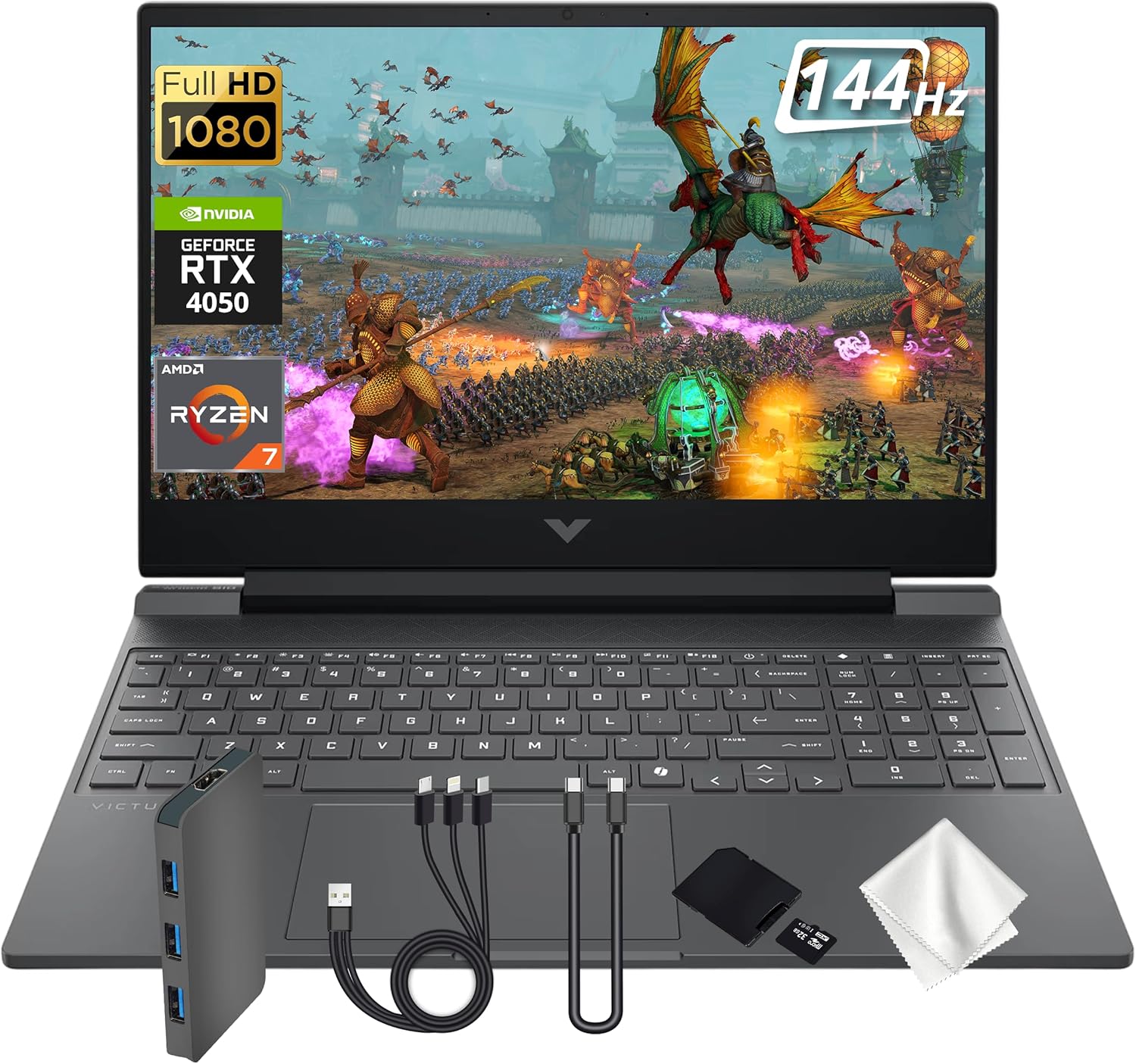
HP Victus 15 (RTX 4050 & Ryzen 7)
  • memory AMD Ryzen 7 7445HS
  • developer_board NVIDIA GeForce RTX 4050
  • layers 16GB (2x8GB) DDR5 5600MHz SO-DIMM
  • track_changes Target GPU: NVIDIA GeForce RTX 3070 Ti (8GB) or AMD Radeon RX 6800 XT (16GB)
ASUS TUF Gaming  A16 with RTX 4050
ASUS TUF Gaming A16 with RTX 4050
  • memory AMD Ryzen 7 7445HS
  • developer_board NVIDIA GeForce RTX 4050
  • layers 16GB DDR5 5600MHz SO-DIMM
  • track_changes Target GPU: NVIDIA GeForce RTX 3070 Ti (8GB) or AMD Radeon RX 6800 XT (16GB)
HP OMEN 16 with RTX 4080 and intel i9 14th Gen
  • memory Intel Core i9-14900HX
  • developer_board NVIDIA GeForce RTX 4080 Laptop GPU
  • layers 64 GB DDR5-5600MHz
  • track_changes Target GPU: NVIDIA GeForce RTX 3070 Ti (8GB) or AMD Radeon RX 6800 XT (16GB)
GIGABYTE AORUS Elite 16 (RTX 5070 & Intel Core Ultra 9 275HX)
  • memory Intel Core Ultra 9 Processor 275HX (Series 2)
  • developer_board NVIDIA GeForce RTX 5070 Laptop GPU
  • layers 32GB DDR5-5600MHz
  • track_changes Target GPU: NVIDIA GeForce RTX 3070 Ti (8GB) or AMD Radeon RX 6800 XT (16GB)
check_circle_outline Recommended based on listed requirements for QHD (1440p).
HP OMEN 16 with RTX 4080 and intel i9 14th Gen
  • memory Intel Core i9-14900HX
  • developer_board NVIDIA GeForce RTX 4080 Laptop GPU
  • layers 64 GB DDR5-5600MHz
  • track_changes Target GPU: NVIDIA GeForce RTX 4070 Ti SUPER (16GB) or AMD Radeon RX 7900 XT (20GB)
GIGABYTE AORUS Elite 16 (RTX 5070 & Intel Core Ultra 9 275HX)
  • memory Intel Core Ultra 9 Processor 275HX (Series 2)
  • developer_board NVIDIA GeForce RTX 5070 Laptop GPU
  • layers 32GB DDR5-5600MHz
  • track_changes Target GPU: NVIDIA GeForce RTX 4070 Ti SUPER (16GB) or AMD Radeon RX 7900 XT (20GB)
MSI Katana 15 HX (RTX 5070 & Intel i7 14th Gen)
  • memory Intel Core i9-14900HX Processor
  • developer_board NVIDIA GeForce RTX 5070 Laptop GPU
  • layers 32GB DDR5-5600MHz
  • track_changes Target GPU: NVIDIA GeForce RTX 4070 Ti SUPER (16GB) or AMD Radeon RX 7900 XT (20GB)
Dell Alienware 16X Aurora (RTX 5070 & Intel Core Ultra 9 275HX)
  • memory Intel Core i9-14900HX Processor
  • developer_board NVIDIA GeForce RTX 5070 Laptop GPU
  • layers 32GB DDR5-5600MHz
  • track_changes Target GPU: NVIDIA GeForce RTX 4070 Ti SUPER (16GB) or AMD Radeon RX 7900 XT (20GB)
Lenovo Thinkpad T1G Gen 8 (RTX 5070 & Ultra 9)
  • memory Intel Core Ultra 9 285H (Arrow Lake-H)
  • developer_board NVIDIA GeForce RTX 5070 Laptop GPU
  • layers 64GB LPDDR5x-8533MT/s (LPCAMM2)
  • track_changes Target GPU: NVIDIA GeForce RTX 4070 Ti SUPER (16GB) or AMD Radeon RX 7900 XT (20GB)
Acer Predator Helios Neo 18 2024 With Rtx 4080
  • memory Intel Core i9-14900HX
  • developer_board NVIDIA GeForce RTX 4080
  • layers 64GB DDR5-5600MHz
  • track_changes Target GPU: NVIDIA GeForce RTX 4070 Ti SUPER (16GB) or AMD Radeon RX 7900 XT (20GB)
ASUS ROG Strix G18 with RTX 4080 and intel i9 14th Gen
  • memory Intel Core i9-14900HX
  • developer_board NVIDIA GeForce RTX 4080
  • layers 32GB DDR5-5600MHz
  • track_changes Target GPU: NVIDIA GeForce RTX 4070 Ti SUPER (16GB) or AMD Radeon RX 7900 XT (20GB)
MSI Vector 17 HX with RTX 4080 in 2025
  • memory Intel Core i9-14900HX
  • developer_board NVIDIA GeForce RTX 4080
  • layers 32GB DDR5-5600MHz
  • track_changes Target GPU: NVIDIA GeForce RTX 4070 Ti SUPER (16GB) or AMD Radeon RX 7900 XT (20GB)
ASUS ROG Strix Scar 18 Gaming Laptop with RTX 4080
  • memory Intel Core i9-14900HX
  • developer_board NVIDIA GeForce RTX 4080
  • layers 32GB DDR5-5600MHz
  • track_changes Target GPU: NVIDIA GeForce RTX 4070 Ti SUPER (16GB) or AMD Radeon RX 7900 XT (20GB)
Dell Alienware M16 Gaming Laptop with RTX 4080
  • memory AMD Ryzen 9 7845HX
  • developer_board NVIDIA GeForce RTX 4080
  • layers Up to 64GB DDR5
  • track_changes Target GPU: NVIDIA GeForce RTX 4070 Ti SUPER (16GB) or AMD Radeon RX 7900 XT (20GB)
check_circle_outline Recommended based on listed requirements for UHD (4K).
LG Gram Pro 17 with RTX 5050
  • memory Intel Core Ultra 9 285H (Series 2) , 14 cores (6 Performance cores + 8 Efficient cores), 20 threads
  • developer_board NVIDIA GeForce RTX 5050 Laptop GPU
  • layers 32GB (2x16GB) DDR5 8400MHz SO-DIMM
  • track_changes Target GPU: NVIDIA GeForce RTX 4090 (24GB) or AMD Radeon RX 7900 XTX (24GB)
HP OMEN Ultra Slim 16 (RTX 5070 & Intel i9)
  • memory Intel Core Ultra 9 285H
  • developer_board NVIDIA GeForce RTX 5070
  • layers 32GB (2x16GB) DDR5 4800MHz SO-DIMM
  • track_changes Target GPU: NVIDIA GeForce RTX 4090 (24GB) or AMD Radeon RX 7900 XTX (24GB)
Thunderobot Radiant 16 (RTX 5070 Ti & Intel i9 14th Gen)
  • memory Intel Core i9-14900HX Processor
  • developer_board NVIDIA GeForce RTX 5070 Ti Laptop GPU
  • layers 64GB DDR5-5600MHz (commonly listed as 4800MHz by some retailers, but 5600MHz is common for 14th Gen HX with DDR5)
  • track_changes Target GPU: NVIDIA GeForce RTX 4090 (24GB) or AMD Radeon RX 7900 XTX (24GB)
Lenovo Legion Pro 7i Gen 10 with RTX 5070 Ti
  • memory Intel Core Ultra 9 Processor 275HX
  • developer_board NVIDIA GeForce RTX 5070 Ti Laptop GPU
  • layers 64GB DDR5-6400MHz
  • track_changes Target GPU: NVIDIA GeForce RTX 4090 (24GB) or AMD Radeon RX 7900 XTX (24GB)
GIGABYTE AORUS Master 16 (RTX 5070 Ti & Intel Core Ultra 9 275HX)
  • memory Intel Core Ultra 9 Processor 275HX (Series 2)
  • developer_board NVIDIA GeForce RTX 5070 Ti Laptop GPU
  • layers 32GB DDR5-5600MHz
  • track_changes Target GPU: NVIDIA GeForce RTX 4090 (24GB) or AMD Radeon RX 7900 XTX (24GB)

MSI Vector 16 HX with RTX 5070 Ti
  • memory Intel Ultra 7 255HX
  • developer_board NVIDIA GeForce RTX 5070 Ti
  • layers 32GB DDR5 5600MHz
  • track_changes Target GPU: NVIDIA GeForce RTX 4090 (24GB) or AMD Radeon RX 7900 XTX (24GB)
GIGABYTE A16 Pro (RTX 5070 Ti & Intel Core Ultra 7)
  • memory Intel Core Ultra 7 240H
  • developer_board NVIDIA GeForce RTX 5070 Ti Laptop GPU
  • layers 32GB LPDDR5X 5600MHz
  • track_changes Target GPU: NVIDIA GeForce RTX 4090 (24GB) or AMD Radeon RX 7900 XTX (24GB)
XMG Fusion 16 (RTX 5070 & Ultra 9)
  • memory Intel Core Ultra 9 275HX
  • developer_board GeForce RTX 5070 Laptop Laptop GPU
  • layers 64GB DDR5-6400MHz (Single-Channel)
  • track_changes Target GPU: NVIDIA GeForce RTX 4090 (24GB) or AMD Radeon RX 7900 XTX (24GB)
Lenovo Legion Pro 5i Gen 10 (RTX 5070 Ti & Intel Core Ultra 9 275HX)
  • memory Intel Core Ultra 9 275HX
  • developer_board NVIDIA GeForce RTX 5070 Ti
  • layers 32GB
  • track_changes Target GPU: NVIDIA GeForce RTX 4090 (24GB) or AMD Radeon RX 7900 XTX (24GB)
Acer Predator Helios Neo 16S (RTX 5070 Ti & Intel Ultra 9 275HX)
  • memory Intel Core Ultra 9 275HX
  • developer_board NVIDIA GeForce RTX 5070 Ti Laptop GPU
  • layers 32 GB DDR5 6400MHz (2x16GB)
  • track_changes Target GPU: NVIDIA GeForce RTX 4090 (24GB) or AMD Radeon RX 7900 XTX (24GB)

info_outline Laptop recommendations are estimates based on available component benchmarks and game requirements. Actual performance may vary depending on settings, drivers, cooling, power limits, etc. Prices and availability subject to change. As an Amazon Associate, we earn from qualifying purchases.

Processing...