




Deals and Discount Offers
Verse Project Gameplay Video
Verse Project Key Specifications
| Specification | Detail |
|---|---|
| Engine | Unreal Engine 5.6.1 |
| Architecture | Single-Shard Server |
| Simulation Scale | 1:1 Solar System |
| Flight Mechanics | Newtonian 6-DOF |
Verse Project System Requirements
1080p
tune Minimum – Low / Medium
tune Recommended – High
1440p
tune Recommended – High / Ultra
2160p
tune Enthusiast – Ultra
Hardware Below These Requirements?
Play Verse Project on Boosteroid Cloud Gaming in 1080p or 4K 60FPS on any PC, Mac, or phone with zero hardware upgrades.
Verse Project Laptop Recommendations
cloud 1080p / 4K 60FPS
flash_on Zero Install / Storage
devices Any Laptop or Phone
Instant Access

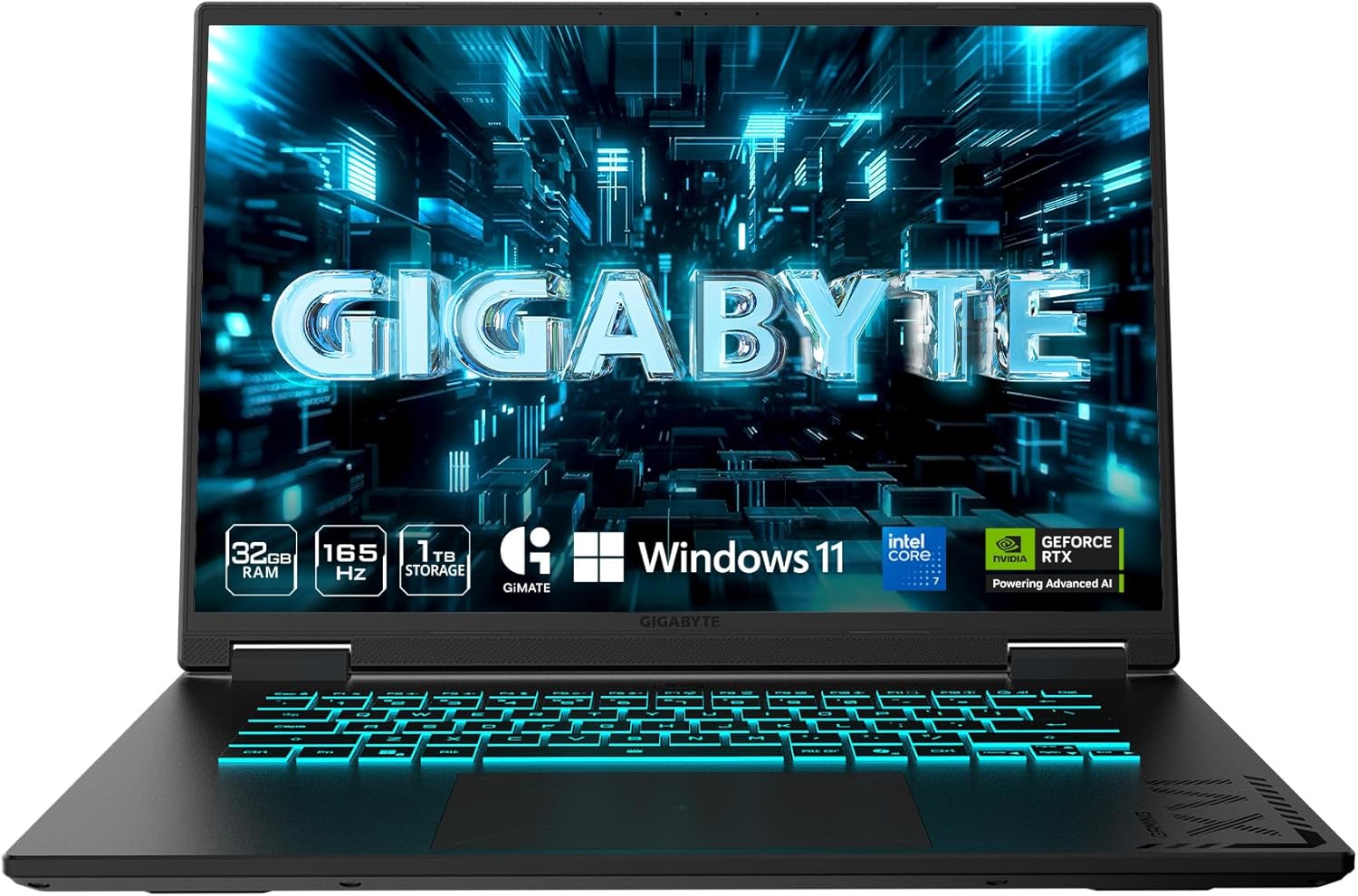
memory Intel Core i7-12700H
developer_board NVIDIA GeForce RTX 3070 140W
storage 32GB DDR4-3200MHz
US $1349
Model: MSI Pulse GL66 with RTX 3070 and i7 12th Gen
memory CPU: Intel Core i7-12700H (Score: 900)
developer_board GPU: NVIDIA GeForce RTX 3070 (Score: 6600) @ 140W TGP
storage RAM: 32GB DDR4-3200MHz
save Storage: 1000GB NVMe
desktop_windows Display: 1920 x 1080 (FHD)
Meets criteria for tier: 1080p - Minimum (Low / Medium).

memory Intel Core i9-13900H
developer_board NVIDIA GeForce RTX 4060 140W
storage 16GB DDR5-5200MHz
US $999
Model: Acer Nitro V with RTX 4060 and i9 13th Gen
memory CPU: Intel Core i9-13900H (Score: 1058)
developer_board GPU: NVIDIA GeForce RTX 4060 (Score: 6700) @ 140W TGP
storage RAM: 16GB DDR5-5200MHz
save Storage: 512GB NVMe
desktop_windows Display: 1920 x 1080 (FHD)
Meets criteria for tier: 1080p - Minimum (Low / Medium).

memory Intel Core i9-14900HX
developer_board NVIDIA GeForce RTX 4060 140W
storage 32GB DDR5-5600MHz
US $1749
Model: Lenovo Legion Pro 5i (i9-14900HX, RTX 4060)
memory CPU: Intel Core i9-14900HX (Score: 1200)
developer_board GPU: NVIDIA GeForce RTX 4060 (Score: 6700) @ 140W TGP
storage RAM: 32GB DDR5-5600MHz
save Storage: 2000GB NVMe
desktop_windows Display: 2560 x 1600 (WQXGA)
Meets criteria for tier: 1080p - Minimum (Low / Medium).

memory Intel Core i9-12900H
developer_board NVIDIA GeForce RTX 3070 Ti 150W
storage 16GB DDR5-4800MHz
US $1397
Model: Asus Rog Strix Scar 15 with RTX 3070 Ti and i9 12th Gen
memory CPU: Intel Core i9-12900H (Score: 1030)
developer_board GPU: NVIDIA GeForce RTX 3070 Ti (Score: 7100) @ 150W TGP
storage RAM: 16GB DDR5-4800MHz
save Storage: 1000GB NVMe
desktop_windows Display: 2560 x 1440 (QHD)
Meets criteria for tier: 1080p - Minimum (Low / Medium).

memory AMD Ryzen 7 7435HS
developer_board NVIDIA GeForce RTX 3050 75W
storage 32GB DDR5-4800MHz
US $799
Model: ASUS TUF A15 with RTX 3050 and Ryzen 7
memory CPU: AMD Ryzen 7 7435HS (Score: 1655)
developer_board GPU: NVIDIA GeForce RTX 3050 (Score: 7220) @ 75W TGP
storage RAM: 32GB DDR5-4800MHz
save Storage: 1000GB NVMe
desktop_windows Display: 1920 x 1080 (FHD)
Meets criteria for tier: 1080p - Minimum (Low / Medium). (TGP 75W < 85W suggested)

memory AMD Ryzen 7 6800H
developer_board NVIDIA GeForce RTX 3060 140W
storage 16GB DDR5-4800MHz
US $1299
Model: ASUS ROG Strix G15 with RTX 3060 and Ryzen 7
memory CPU: AMD Ryzen 7 6800H (Score: 880)
developer_board GPU: NVIDIA GeForce RTX 3060 (Score: 7448) @ 140W TGP
storage RAM: 16GB DDR5-4800MHz
save Storage: 1000GB NVMe
desktop_windows Display: 1920 x 1080 (FHD)
Meets criteria for tier: 1080p - Minimum (Low / Medium).

memory AMD Ryzen 9 5900HS
developer_board NVIDIA GeForce RTX 3080 100W
storage 16GB DDR4-3200MHz
US $1489
Model: ASUS ROG Zephyrus G15 Ultra with RTX 3080 and Ryzen 9
memory CPU: AMD Ryzen 9 5900HS (Score: 820)
developer_board GPU: NVIDIA GeForce RTX 3080 (Score: 7904) @ 100W TGP
storage RAM: 16GB DDR4-3200MHz
save Storage: 1000GB NVMe
desktop_windows Display: 2560 x 1440 (QHD)
Meets criteria for tier: 1080p - Minimum (Low / Medium).

memory Intel Core i7-13620H
developer_board NVIDIA GeForce RTX 4070
storage 16GB DDR5-4800MHz
US $1350
Model: MSI Katana 15 with RTX 4070
memory CPU: Intel Core i7-13620H (Score: 843)
developer_board GPU: NVIDIA GeForce RTX 4070 (Score: 8700)
storage RAM: 16GB DDR5-4800MHz
save Storage: 1000GB NVMe
desktop_windows Display: 2560 x 1440 (QHD)
Meets criteria for tier: 1080p - Minimum (Low / Medium). (TGP unknown; 85W+ suggested)

memory Intel Core i7-14700HX
developer_board NVIDIA GeForce RTX 4070
storage 16GB DDR5-5600MHz
US $1899
Model: Alienware M18 with RTX 4070
memory CPU: Intel Core i7-14700HX (Score: 860)
developer_board GPU: NVIDIA GeForce RTX 4070 (Score: 8700)
storage RAM: 16GB DDR5-5600MHz
save Storage: 1000GB NVMe
desktop_windows Display: 2560 x 1600 (QHD+)
Meets criteria for tier: 1080p - Minimum (Low / Medium). (TGP unknown; 85W+ suggested)

memory Intel Core i9-14900HX
developer_board NVIDIA GeForce RTX 4070
storage 32GB DDR5-5600MHz
US $1699
Model: MSI Creator M16 HX with RTX 4070
memory CPU: Intel Core i9-14900HX (Score: 1200)
developer_board GPU: NVIDIA GeForce RTX 4070 (Score: 8700)
storage RAM: 32GB DDR5-5600MHz
save Storage: 2000GB NVMe
desktop_windows Display: 2560 x 1600 (QHD+)
Meets criteria for tier: 1080p - Minimum (Low / Medium). (TGP unknown; 85W+ suggested)









-
Core Requirements
- desktop_windowsOperating System: 64-bit Windows 10 / 11
Required to handle large memory addressing for the UE5.6.1 client and 64-bit procedural generation algorithms.
- memoryDirectX: DirectX 12
Necessary for optimal Unreal Engine 5.6.1 performance, Nanite geometry, and hardware-accelerated rendering.
- save_altStorage Note: 50 GB NVMe SSD
Strictly requires an SSD. Traditional HDDs will fail to stream high-resolution lunar topography fast enough, causing collision detection failures.
settings_applications Optimization Notes:
Upscaling: Supports DLSS 3 and FSR 3.
Key Settings: Disabling volumetric fog and shadows on Low/Medium presets provides the highest framerate gains during complex space station docking sequences.
Verse Project: Map Size and Regions
Verse Project: Post-Launch Content / DLC
Verse Project: Skills & Upgrades Overview
Verse Project: Game Editions
Verse Project: Cross-Platform / Crossplay
Verse Project: Top 5 Weapons (Subjective/Iconic)
Close
Range Explosive Missiles: These high-yield ordnance systems require precise scanning locks and are primarily deployed against slow-moving freighters or stationary orbital extractors, dealing massive kinetic and thermal damage.
Long
Range Interceptors: Designed for extreme-range tracking, these missiles excel at stripping enemy shields before the target can close the distance.
Fixed Course Lasers
Standard energy weapons utilized by nimble interceptors, relying on continuous time-on-target to melt through hull plating.
Heavy Turret Auto
Cannons: Mounted on multi-crew Corvettes and Frigates, these ballistic weapons shred incoming fighters but require a dedicated gunner for optimal target tracking.
Boarding Shotguns
Used during tense, close-quarters FPS engagements inside space stations or during hostile ship takeovers, providing lethal stopping power within the confined corridors of a spacecraft.
Verse Project: Specific Game Elements
Explore in-depth equipment, cast, combat mechanics, and world collectibles documented for Verse Project:
Verse Project Weapons
Designed for high-yield kinetic and explosive damage against slow-moving or stationary targets.
Fixed forward-firing weapons utilized in dogfights, featuring unique heat generation rates and kinetic impacts.
Designed for extreme-range target tracking and shield depletion prior to close engagement.
Verse Project Vehicles
A command and combat vessel structurally viable for multi-crew operations and centralized target acquisition.
Heavy combat vessel with a high armor rating and heavy landing gear for hostile terrain operations.
A multi-role combat vessel featuring modular cargo bays and advanced navigation displays.
A high-performance interceptor prioritizing maneuverability and speed for atmospheric and orbital flight.
VTOL-capable logistics transport optimized for entry-level cargo capacity and surface extraction.
Verse Project Animals / Creatures
Role: Logistical Cargo
Verse Project Characters
Lead Developer
Architect of the 64-bit double precision GPU generation and single-shard AOI network code.
Art Director
Visionary behind the utilitarian, industrial aesthetic of Host Station and the game's hard sci-fi tone.
workspace_premium Top 3 Characters
Art Director Leonid Arapov
Often referenced within the community as the visionary behind the game's brutalist, hard sci-fi aesthetic and 1:1 scale environment design, serving as a pseudo-mythological figure among the player base.
Lead Developer Denis
The architectural mind behind the game’s proprietary 64-bit double-precision engine modifications and single-shard AOI network, frequently communicating directly with players regarding backend stability.
The Player Corporation CEOs
In the single-shard environment, the most famous (or infamous) characters are the actual players who lead massive corporate fleets, manipulate market economies, and dictate the geopolitical landscape of Host Station through organized blockades and resource monopolies.
Verse Project Missions / Objectives
Objective: Haul high-value Earth biologicals through orbital debris fields to Host Station.
Objective: Track down and destroy rogue 'Flying AI' or hostile players with low Security Status.
Objective: Deploy heavy mineral extractors on the lunar surface and defend them from rival players.
workspace_premium Top 3 Missions/Objectives
Deep
Space Logistics Hauling: Players must transport highly volatile or heavy biological cargo from Earth's gravity well through the perilous Kessler Belt to orbital stations. This requires meticulous fuel management, navigation of debris fields, and evading pirate blockades.
Extractor Defense and Hacking
Players establish lucrative mineral extraction sites on the lunar surface, forcing them to physically defend the territory from rival player corporations attempting to hack or destroy the machinery for profit.
Bounty Hunting and Sector Patrol
Utilizing advanced scanning probes and the game's Security Status crime tracker, mercenary pilots are contracted to hunt down notorious player pirates, engaging in high-speed, 6-DOF orbital dogfights to secure the sector and collect corporate payouts.
Verse Project Companions / Summons
Ability: Locates deep space mineral deposits and tracks hostile fleet movements.
Ability: Defends mining sites from hostile players and NPCs when the owner is offline.
Verse Project Collectibles
Location/Use: Stolen from rival player extractors via Stage IX electronic hacking tools.
Location/Use: Procedurally generated craters and extraction zones on the lunar surface.
workspace_premium Top 3 Collectibles
Rare Raw Minerals
Extracted from deep lunar craters or hazardous asteroid fields, these high-purity geological samples are the lifeblood of the player-driven economy and command massive prices at orbital hubs.
Hacked Corporate Data
Utilizing specialized electronic tools introduced in Stage IX, players can steal encrypted telemetry or market algorithms from rival automated extractors, serving as highly lucrative, zero-mass contraband.
Salvaged Ship Components
Following large-scale PvP fleet engagements, savvy scavengers can navigate the wreckage to extract intact reactors or maneuvering thrusters, which can be reinstalled in their own vessels or sold on the black market to avoid standard manufacturing costs.
Verse Project Armor
Focus/Stats: Environmental Protection, Thruster Fuel Reserve, Life Support Duration
Focus/Stats: High kinetic resistance, massive weight penalty to acceleration and inertia.
Verse Project Clothing / Appearance
Options: Color palettes, corporate insignias, helmet visor tints.
Verse Project: Other Features & Info
- labelMultiplayer ModesVerse Project radically departs from standard MMO instancing by utilizing a true 'single-shard' network architecture.Every single player, player-constructed extractor, and corporate fleet exists within the exact same continuous universe. There are no partitioned zones, regional servers, or private PvE instances.This forces profound geopolitical interaction; a blockade enacted by a player faction at a major orbital hub affects the market prices for the entire global player base.To manage the immense server load, a proprietary Area of Interest (AOI) subsystem dynamically filters network packets based on localized proximity.PvP is an ever-present threat, regulated only by automated safe zones and a punitive 'Security Status' system that penalizes unprovoked murder, making every deep-space excursion a tense, high-stakes multiplayer experience.
- labelUser InterfaceThe User Interface in Verse Project completely rejects modern, sleek gaming abstractions in favor of hardcore, industrial diegesis.When purchasing ship components or managing logistics, the menus are explicitly styled to resemble brutalist heavy machinery catalogs and manufacturer sorting grids, deeply enhancing the immersion of operating within a utilitarian, hard sci-fi future.Players do not interact with floating, magical quest boards; instead, they must physically walk to terminal screens within the 4-kilometer-wide Host Station to request ships or review the player-driven market prices.In the cockpit, the HUD is relentlessly practical, providing critical telemetry data, orbital trajectory vectors, and power distribution readouts.Recent patches have improved usability by introducing much-needed Field of View (FOV) sliders and repositioning coordinate overlays to ensure vital navigational data does not obscure the pilot's line of sight.
- labelSound and MusicSound design in Verse Project strictly adheres to the acoustic realities of a vacuum, creating a deeply isolating and atmospheric auditory experience.In deep space, players hear only the muffled, structural groans of their own hull, the pressurized hiss of life support systems, and the heavy vibrations of their main thrusters transmitted through the ship's frame.External explosions are completely silent unless debris physically impacts the player's vessel.When docked at Host Station or within pressurized environments, the soundscape shifts to the clanking machinery, distant industrial alarms, and the hum of massive reactors.Music is utilized sparingly, favoring a minimalist, dark ambient synthesizer score that swells only during high-stakes orbital engagements or when breaking a planet's gravity well, emphasizing the overwhelming scale and danger of the Solar System.
- labelGraphics and VisualsPowered by a radically modified Unreal Engine 5.6.1, Verse Project delivers a visually staggering, photorealistic depiction of the Solar System.The developers created the 'Planetarea System V.3,' a proprietary procedural generation tool that utilizes authentic real-world topographical data to render a 1:1 scale lunar surface, complete with accurate craters and dynamically generated geological features.Lighting is harsh and realistic, accurately simulating the blinding intensity of the sun unfiltered by an atmosphere, contrasting sharply with the pitch-black shadows of deep space.Ships are modeled with excruciating mechanical detail, featuring visible thruster gimbals, weathered armor plating, and functional landing gear that reacts dynamically to uneven terrain.Despite the scale, the development team has heavily optimized the rendering pipeline, dropping costly volumetric fog on lower presets to maintain stable framerates during complex orbital transitions.
- labelAccessibility FeaturesWhile Verse Project targets a hardcore simulation demographic, the developers have recently implemented several vital accessibility features to reduce pilot fatigue and motion sickness.The highly requested Field of View (FOV) slider allows players to widen their perspective, crucial for maintaining situational awareness in close-quarters dogfights and reducing claustrophobia during extended FPS station traversal.Options to invert vertical camera movement are standard, accommodating varied HOTAS and gamepad control schemes.To assist players with mid-range hardware, the graphics engine allows for granular disabling of intensive post-processing effects, such as motion blur and depth of field, which not only stabilizes framerates but also greatly aids visual clarity for players with visual processing sensitivities.An 'Assist Mode' flight toggle acts as an essential accessibility tool, automating counter-thrust to prevent players from losing control in the vacuum of space.
- labelStory and SettingVerse Project eschews the traditional space opera narrative in favor of a grounded, hard sci-fi environment set within a 1:1 scale representation of our actual Solar System.The primary hub of activity is Host Station, a massive 4-kilometer-wide orbital installation located near the Moon, functioning as the geopolitical and logistical center for player operations.Rather than relying on mystical alien races or sprawling intergalactic empires, the setting focuses entirely on human industrial expansion and the cutthroat realities of corporate dominance.The overarching narrative is player-driven, shaped by the geopolitical maneuvers, corporate wars, and economic trade routes established by the community.With strict survival mechanics and realistic logistical challenges, such as navigating the hazardous debris fields of the Kessler Belt, the setting is a stark, utilitarian vision of humanity's expansion into the hostile vacuum of space.
- labelTop 3 Mounts/CompanionsIn the hard sci-fi reality of Verse Project, biological mounts are replaced by highly advanced, mechanical assets that players rely on for survival.looks_one Rank #1
The RCUI Bao Shuttle
Acting as the ultimate beginner's companion, this VTOL-capable vessel is the player's primary means of early traversal, optimized for lunar logistics and surface extraction.
looks_two Rank #2Automated Defense Turrets
Once deployed around a player's surface extractor, these autonomous AI-driven weapon systems act as tireless sentinels, guarding valuable resource nodes from rival hackers while the player is offline.
looks_3 Rank #3Advanced Scanning Probes
Deployed from multi-crew frigates, these automated telemetry drones function as deep-space hounds, seeking out hidden mineral deposits, tracking enemy fleet movements, and feeding critical targeting data back to the ship’s central gunnery consoles.