Select Games to Compare
Benchmark your exact mobile GPU wattage (TGP), battery throttling drops, and cooling pad requirements for these games.
Destiny 2 vs The Outer Worlds 2
| close | close |
|---|---|
| shopping_cart Where to Buy | |
| info General Information | |
| Release Date | |
| Sep 6, 2017 | Oct 29, 2025 |
| Developer | |
| Bungie | Obsidian Entertainment |
| Publisher | |
| Bungie | Xbox Game Studios |
| Genre(s) | |
| Action MMO, First-Person Shooter, Looter Shooter, Live-Service, Sci-Fi | Action RPG, First-Person, RPG, Sci-Fi, Shooter |
| Engine | |
| Tiger Engine | Unreal Engine 5 |
| stars Ratings & Price | |
| Content Rating | |
| Teen | M (Mature 17+) |
| Avg. User Rating | |
| 4.1 / 5.0 | 4.3 / 5.0 |
| Current Price (USD) | |
| Free | $69.99 |
| tune Key Specs | |
| Quick Highlights | |
|
|
| sports_esports Gameplay & Mechanics | |
| Companions/Followers | |
|
|
| Key Collectibles | |
|
|
| Key Themes | |
|
|
| colorize Combat & Gear | |
| Weapons Overview | |
|
|
| Armor / Gear Sets | |
|
|
| Outfits/Customization | |
|
|
| trending_up Progression & Upgrades | |
| Skills & Progression | |
|
Progression relies on two main pillars: Power Level (increased by equipping higher-stat loot) and Subclass customization. Players choose from three classes (Titan, Hunter, Warlock), each featuring distinct movement mechanics and class abilities (barricades, dodges, rifts). Using the updated 'Subclass 3.0' system, players deeply customize their elemental subclasses (Solar, Arc, Void, Stasis, Strand) by equipping 'Aspects' and 'Fragments' that dictate how their abilities synergize. 'The Final Shape' introduced the 'Prismatic' subclass, allowing players to transcend boundaries and mix abilities from both Light and Darkness simultaneously. Power is further customized via an intricate armor modding system, allowing for specialized builds focused on grenade spam, melee damage, or healing. |
Features a deep, complex, and irreversible progression system. Players invest in 12 skills (like Speech, Sneak, Hacking) and over 90 perks (like Serial Killer, Charlatan). The unique 'Flaw' system returns, offering players a powerful benefit tied to a gameplay-altering detriment based on their actions (e.g., 'Bad Knees' Flaw for frequent crouching). |
| public World & Exploration | |
| World & Level Design | |
|
Destiny 2 is not a single open world, but a collection of massive, distinct sandbox destinations. Players orbit the solar system via a Director menu, choosing to land on beautifully crafted patrol zones. These include the overgrown ruins of the European Dead Zone (EDZ), the Vex-transformed landscapes of Nessus, the frozen, golden-age ruins of Europa, the treacherous Throne World of Savathûn, the neon-cyberpunk city of Neomuna on Neptune, and the surreal, fractured reality of The Pale Heart inside the Traveler. Each region acts as a public space where players seamlessly encounter each other to complete public events, find hidden Lost Sectors, and initiate specific strikes or story missions. |
The game features a 'semi-open world' or 'open-zone' structure, not a single seamless map. Players travel between at least four large, distinct planets (like the tropical Eden and the snowy Cloyster) and orbital installations, each with a unique visual identity and controlling faction. Enemies do not respawn, allowing zones to be cleared permanently. |
| Playable Vehicles | |
|
|
| Notable Fauna/Mounts | |
|
N/A |
| book Story & Characters | |
| Main Characters | |
|
|
| Example Missions | |
|
|
| people Multiplayer | |
| Multiplayer Details | |
|
The game is inherently multiplayer. PvE activities range from 3-player matchmade 'Vanguard Ops' (Strikes) and narrative missions to brutally difficult 3-player 'Dungeons' and pinnacle 6-player 'Raids' (like the Vault of Glass or Salvation's Edge) that require intense communication and lack matchmaking. Competitive PvP is handled in 'The Crucible', featuring modes like Control, Clash, and the highly competitive 3v3 weekend tournament, 'Trials of Osiris'. Additionally, 'Gambit' offers a unique PvPvE hybrid where two teams race to clear AI enemies and bank motes while invading each other's arenas. |
The game is a strictly single-player experience and does not have any multiplayer or co-operative modes. |
| extension Editions & DLC | |
| Available Editions | |
|
Destiny 2 is fundamentally free-to-play ('New Light'), offering access to core playlists (Strikes, Crucible, Gambit) and select patrol zones. However, the bulk of the content relies on purchasing expansions. Players can buy standalone expansions (such as The Witch Queen, Lightfall, or The Final Shape) or purchase bundles like the 'Legacy Collection' to access older campaigns, raids, and exotic quests. The game transitioned from a seasonal model to an 'Episodic' structure following The Final Shape, with three massive acts per episode (e.g., Echoes, Revenant, Heresy) offering continuous story beats and loot. |
The game is available as a Standard Edition ($69.99) and a Premium Edition, which includes 5-day early access. It is also available day one on Xbox Game Pass. |
| Post-Launch Content / DLC | |
|
Destiny 2 is the quintessential live-service game. Its post-launch model relies on major yearly expansions that advance the overarching narrative, add entirely new destinations, and introduce new subclasses or mechanics. Between expansions, the game receives continuous updates via its Episodic format (formerly Seasons), which introduce new 3-player and 6-player matchmade activities, exotic missions, and Battle Pass rewards. Bungie also frequently updates the game with sandbox balancing patches, holiday events (Festival of the Lost, The Dawning), and quality-of-life overhauls. |
The game features an 'Expansion Pass' available with the Premium Edition, which includes two post-launch story packs. 'Loose Cannon' (Q2 2026) and 'The Flower & the Flame' (Q3 2026) will allow players to experience new stories through the perspective of other characters. |
| help_outline FAQ | |
| Frequently Asked Questions | |
|
|
| build Technical Details | |
| Graphics & Visual Fidelity | |
|
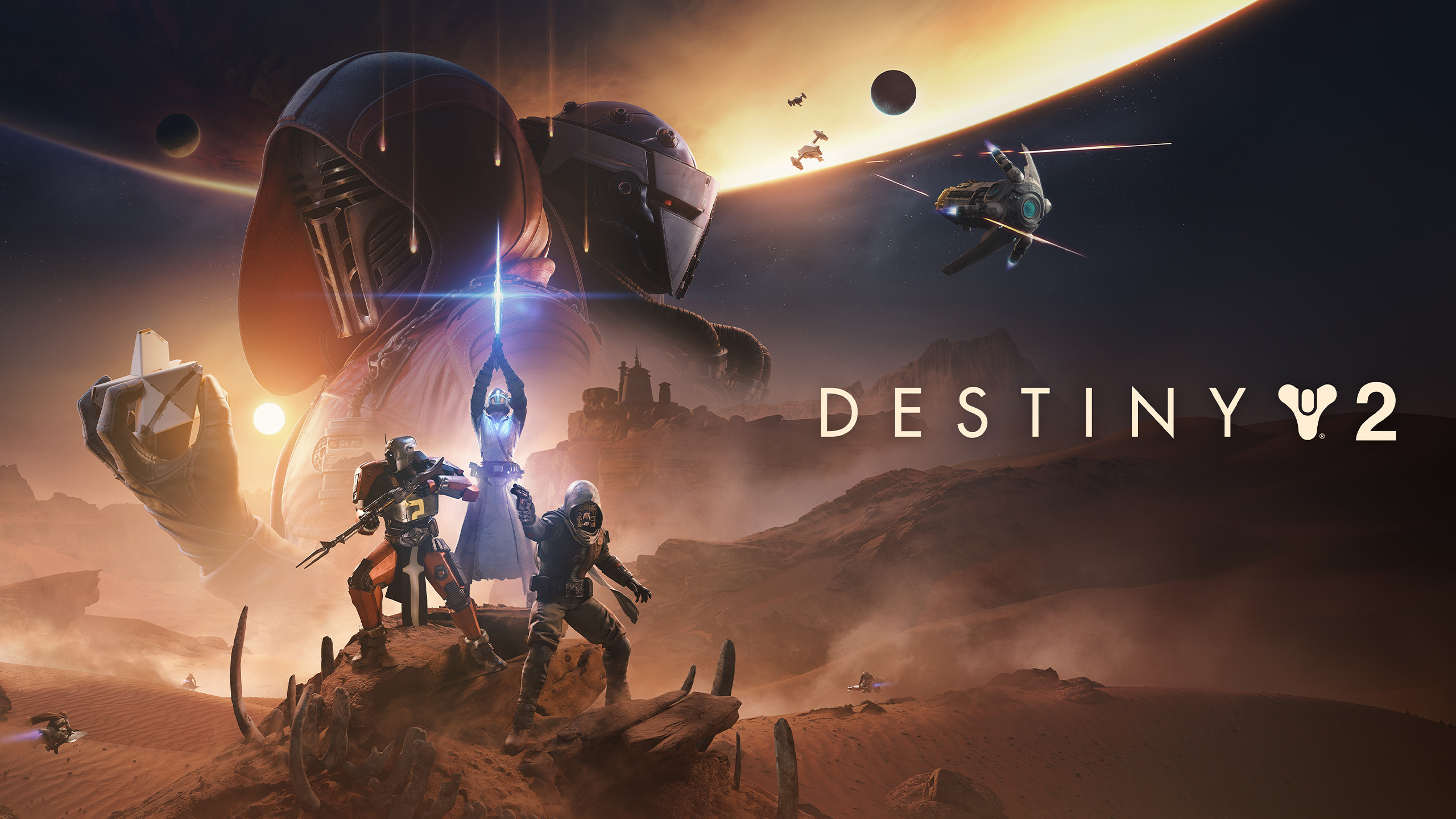
Powered by the Tiger Engine, Destiny 2 features breathtaking art direction that often masks its aging technological foundation. The game is famous for its awe-inspiring skyboxes—massive, painted backdrops of shattered planets, colossal alien dreadnoughts, and swirling nebulas that make every destination feel overwhelmingly vast. The character and weapon models are meticulously detailed, and the particle effects during combat—especially when multiple Supers are cast simultaneously—are vibrant and chaotic. The visual distinctness of its alien races and their architecture is a masterclass in sci-fi design. |
N/A |
| Audio & Soundtrack | |
|
The auditory experience is universally praised as one of the best in gaming. The sound design for weapons is incredibly punchy and distinct; veterans can identify which gun is firing across a map solely by its sound. The musical score, originally featuring work by Michael Salvatori and Skye Lewin, is sweeping, heroic, and emotional, transitioning from somber, atmospheric choruses in deep space to adrenaline-pumping synth and orchestral anthems during raid boss DPS phases. |
N/A |
| User Interface (UI/UX) | |
|
The UI is clean and highly stylized, famously popularizing the free-moving cursor system on gamepads. The 'Director' acts as the central hub for launching activities, navigating planets, and tracking quests. The character screen provides a clean layout of equipped weapons, armor, power levels, and subclass configuration. The game features an extensive 'Collections' tab to track acquired gear and a 'Triumphs' menu that acts as an in-game achievement system, rewarding players with equippable Titles (like 'Conqueror' or 'Godslayer') for completing grueling challenges. |
N/A |
| Accessibility Options | |
|
Bungie has heavily invested in accessibility features over the years. The game includes robust colorblind modes that completely overhaul the radar and shield colors to assist visually impaired players. It features fully remappable controls on both keyboard and gamepad, toggleable sprint and aim functions, full-auto melee settings, and customizable subtitle sizes/backgrounds. Additionally, a major update introduced 'Full Auto Retrofit' functionally as an intrinsic option for all weapons, significantly reducing hand strain. |
N/A |
| video_library Media Links | |
| Gameplay Video | |
| launchWatch | launchWatch |
| Walkthrough/Guide | |
| launchView | launchView |
| settings_applications System Requirements | |
| 1080p (Full HD) - Recommended (High Preset, 1080p (60+ FPS Target)) CPU: Official recommended processors, providing enough multi-threaded overhead to eliminate stuttering during 6-player raid encounters. CPU (Laptop): Ensures perfectly fluid frame pacing, critical for maintaining aiming consistency in the Crucible. GPU: The official recommended GPUs have the rasterization power to max out textures and lighting at 1080p. GPU (Laptop): Delivers a perfect, locked 60+ FPS experience on a portable display with maximum visual fidelity. RAM: The official recommended memory, though 16GB is practically required for modern Windows overhead. Storage: NVMe SSD highly recommended. | |
memoryCPU: Intel Core i5-2400 3.4 GHz / i5-7400 3.5 GHz or AMD Ryzen R5 1600X 3.6 GHz developer_boardGPU: NVIDIA GeForce GTX 970 4GB / GTX 1060 6GB or AMD R9 390 8GB laptop_macCPU (L): Intel Core i7-9750H / AMD Ryzen 7 4800H laptop_windowsGPU (L): NVIDIA GeForce RTX 3060 Mobile / RTX 4050 Mobile layersRAM: 8 GB saveStorage (Tier): 150 GB available space | — |
| 1080p (Full HD) - Minimum (Low/Medium Preset, 1080p (30-60 FPS Target)) CPU: The official minimum processors. These older CPUs are the bare minimum to run the game logic and handle basic patrol zones. CPU (Laptop): Entry-level quad-core mobile CPUs comfortably exceed the minimums and will run the game smoothly. GPU: The official minimum GPUs. The 2GB VRAM buffer is incredibly small by modern standards and necessitates strictly low settings. GPU (Laptop): Capable of providing a highly playable 1080p experience at 60 FPS on medium settings. RAM: Official minimum required system memory. Storage: SSD strongly recommended to prevent multi-minute load times when flying into the Tower hub. | |
memoryCPU: Intel Core i3-3250 3.5 GHz / Intel Pentium G4560 3.5 GHz or AMD FX-4350 4.2 GHz developer_boardGPU: NVIDIA GeForce GTX 660 2GB / GTX 1050 2GB or AMD Radeon HD 7850 2GB laptop_macCPU (L): Intel Core i5-8300H / AMD Ryzen 5 3550H laptop_windowsGPU (L): NVIDIA GeForce GTX 1650 Mobile layersRAM: 6 GB saveStorage (Tier): 150 GB available space | memoryCPU: Intel Core i5-8400 or AMD Ryzen 5 2600 developer_boardGPU: NVIDIA GeForce GTX 1070 (8GB) or AMD Radeon RX 5700 (8GB) laptop_macCPU (L): Intel Core i7-9750H / AMD Ryzen 5 3600H or better. laptop_windowsGPU (L): NVIDIA GeForce RTX 2070 Mobile (8GB) or RTX 3060 Laptop (6GB). layersRAM: 16 GB saveStorage (Tier): 110 GB SSD |
| 1440p (QHD/2K) - Recommended (High Preset, 1440p resolution.) CPU: The official recommended desktop CPU for a smooth experience. CPU (Laptop): A strong mid-range laptop CPU is recommended for consistent performance. GPU: Official recommended desktop GPU for 1440p gameplay. GPU (Laptop): A high-end laptop GPU is needed for a high-quality 1440p experience. RAM: 16GB RAM is officially recommended for optimal performance. Storage: An SSD is required for this tier. | |
| — | memoryCPU: Intel Core i7-10700K or AMD Ryzen 5 5600X developer_boardGPU: NVIDIA GeForce RTX 3080 or AMD Radeon RX 6800 XT laptop_macCPU (L): Intel Core i7-11800H / AMD Ryzen 7 5800H or better. laptop_windowsGPU (L): NVIDIA GeForce RTX 3080 Laptop (8GB, High TGP) or RTX 4070 Laptop (8GB). layersRAM: 16 GB saveStorage (Tier): 110 GB SSD |
| 1440p (QHD/2K) - Enthusiast (Highest Preset, 1440p (60-144 FPS Target)) CPU: Modern mid-to-high end CPUs provide massive overhead, ensuring that complex particle effects and enemy spawns don't halt the render thread. CPU (Laptop): Easily powers the game's logic while driving high-refresh-rate 1440p laptop displays. GPU: Handles the increased pixel count cleanly, ensuring sharp visuals on the intricate armor sets and alien architecture. GPU (Laptop): Provides the necessary compute overhead for 1440p rendering on portable panels. RAM: Optimal configuration for running the game alongside Discord and browser tabs. Storage: NVMe SSD. | |
memoryCPU: Intel Core i5-11600K / AMD Ryzen 5 5600X developer_boardGPU: NVIDIA GeForce RTX 3060 Ti / AMD Radeon RX 6700 XT laptop_macCPU (L): Intel Core i7-11800H / AMD Ryzen 7 5800H laptop_windowsGPU (L): NVIDIA GeForce RTX 3070 Mobile / RTX 4060 Mobile layersRAM: 16 GB saveStorage (Tier): 150 GB available space | — |
| 2160p (UHD/4K) - Ultra (Highest Preset, 4K (60+ FPS)) CPU: Ensures absolutely no bottlenecks at the highest visual fidelity. CPU (Laptop): Desktop-grade performance in a portable chassis. GPU: Powers the grueling 4K resolution effortlessly, rendering the breathtaking planetary skyboxes flawlessly. GPU (Laptop): Required to maintain a stable 4K frame rate on an external display during the most chaotic encounters. RAM: Overkill for Destiny 2, but provides maximum system stability. Storage: Gen4 NVMe SSD. | |
memoryCPU: Intel Core i7-13700K / AMD Ryzen 7 7800X3D developer_boardGPU: NVIDIA GeForce RTX 4070 Ti / AMD Radeon RX 7800 XT laptop_macCPU (L): Intel Core i9-13900HX / AMD Ryzen 9 7945HX laptop_windowsGPU (L): NVIDIA GeForce RTX 4080 Mobile layersRAM: 32 GB saveStorage (Tier): 150 GB available space | — |
| save Overall Storage | |
Spec: 150 GB to 300 GB available space (SSD Required) Note: An SSD is practically mandatory. While the base game is smaller, having the latest expansions installed pushes the size north of 150 GB, and Steam requires additional overhead for unpacking expansion pre-loads. Type: SSD | Spec: 110 GB available space (SSD Required) Note: An SSD is a mandatory requirement for the game to handle the streaming of its large, high-fidelity open zones. Type: SSD |
| desktop_windows Operating System | |
Spec: Windows 10 64-bit Explanation: A 64-bit operating system is strictly required. Bungie officially ended support for Windows 7, 8, and 8.1 on June 4, 2024, to maintain modern security and API standards. | Spec: Windows 10 / 11 64-bit Explanation: A modern 64-bit OS is a firm requirement. |
| gamepad DirectX Version | |
| Spec: Version 11 Explanation: The game utilizes DirectX 11, providing broad compatibility and incredibly optimized draw calls for its stunning skyboxes and lighting. | Spec: Version 12 Explanation: DirectX 12 is required for ray tracing and other advanced features. |
| info_outline Other Game Notes | |
|
|
| build Optimization Details | |
| N/A |
| laptop Laptop Considerations | |
|
|
info_outline Feature details based on available data. System requirements and performance estimates may vary.
laptop_chromebook Laptop Recommendations
Common Recommendations (Handles All Compared Games)

- memory Intel Core i7-12700H
- developer_board NVIDIA GeForce RTX 3070
- layers 32GB DDR4-3200MHz
- track_changes Target GPU: NVIDIA GeForce GTX 1650 Mobile / NVIDIA GeForce RTX 2070 Mobile (8GB) or RTX 3060 Laptop (6GB).

- memory Intel Core i9-13900H
- developer_board NVIDIA GeForce RTX 4060
- layers 16GB DDR5-5200MHz
- track_changes Target GPU: NVIDIA GeForce GTX 1650 Mobile / NVIDIA GeForce RTX 2070 Mobile (8GB) or RTX 3060 Laptop (6GB).

- memory Intel Core i9-14900HX
- developer_board NVIDIA GeForce RTX 4060
- layers 32GB DDR5-5600MHz
- track_changes Target GPU: NVIDIA GeForce GTX 1650 Mobile / NVIDIA GeForce RTX 2070 Mobile (8GB) or RTX 3060 Laptop (6GB).

- memory AMD Ryzen 7 7435HS
- developer_board NVIDIA GeForce RTX 3050
- layers 32GB DDR5-4800MHz
- track_changes Target GPU: NVIDIA GeForce RTX 3060 Mobile / RTX 4050 Mobile

- memory AMD Ryzen 9 8940HX Processor
- developer_board NVIDIA GeForce RTX 5060 Laptop GPU
- layers 32GB DDR5-5200MHz
- track_changes Target GPU: NVIDIA GeForce RTX 3060 Mobile / RTX 4050 Mobile

- memory AMD Ryzen 7 7445HS
- developer_board NVIDIA GeForce RTX 4050
- layers 16GB (2x8GB) DDR5 5600MHz SO-DIMM
- track_changes Target GPU: NVIDIA GeForce RTX 3060 Mobile / RTX 4050 Mobile
- memory Intel Core i7-12700H
- developer_board NVIDIA GeForce RTX 3070
- layers 32GB DDR4-3200MHz
- track_changes Target GPU: NVIDIA GeForce RTX 3070 Mobile / RTX 4060 Mobile
- memory Intel Core i9-13900H
- developer_board NVIDIA GeForce RTX 4060
- layers 16GB DDR5-5200MHz
- track_changes Target GPU: NVIDIA GeForce RTX 3070 Mobile / RTX 4060 Mobile
- memory Intel Core i9-14900HX
- developer_board NVIDIA GeForce RTX 4060
- layers 32GB DDR5-5600MHz
- track_changes Target GPU: NVIDIA GeForce RTX 3070 Mobile / RTX 4060 Mobile
- memory AMD Ryzen 7 7435HS
- developer_board NVIDIA GeForce RTX 3050
- layers 32GB DDR5-4800MHz
- track_changes Target GPU: NVIDIA GeForce RTX 3080 Laptop (8GB, High TGP) or RTX 4070 Laptop (8GB).

- memory AMD Ryzen 7 6800H
- developer_board NVIDIA GeForce RTX 3060
- layers 16GB DDR5-4800MHz
- track_changes Target GPU: NVIDIA GeForce RTX 3080 Laptop (8GB, High TGP) or RTX 4070 Laptop (8GB).

- memory AMD Ryzen 9 5900HS
- developer_board NVIDIA GeForce RTX 3080
- layers 16GB DDR4-3200MHz
- track_changes Target GPU: NVIDIA GeForce RTX 3080 Laptop (8GB, High TGP) or RTX 4070 Laptop (8GB).

- memory Intel Core i9-14900HX
- developer_board NVIDIA GeForce RTX 4080 Laptop GPU
- layers 64 GB DDR5-5600MHz
- track_changes Target GPU: NVIDIA GeForce RTX 4080 Mobile

- memory Intel Core Ultra 9 Processor 275HX (Series 2)
- developer_board NVIDIA GeForce RTX 5070 Laptop GPU
- layers 32GB DDR5-5600MHz
- track_changes Target GPU: NVIDIA GeForce RTX 4080 Mobile

- memory Intel Core i9-14900HX Processor
- developer_board NVIDIA GeForce RTX 5070 Laptop GPU
- layers 32GB DDR5-5600MHz
- track_changes Target GPU: NVIDIA GeForce RTX 4080 Mobile
For Destiny 2 Specifically
- memory Intel Core i7-12700H
- developer_board NVIDIA GeForce RTX 3070
- layers 32GB DDR4-3200MHz
- track_changes Target GPU: NVIDIA GeForce GTX 660 2GB / GTX 1050 2GB or AMD Radeon HD 7850 2GB
- memory Intel Core i9-13900H
- developer_board NVIDIA GeForce RTX 4060
- layers 16GB DDR5-5200MHz
- track_changes Target GPU: NVIDIA GeForce GTX 660 2GB / GTX 1050 2GB or AMD Radeon HD 7850 2GB
- memory Intel Core i9-14900HX
- developer_board NVIDIA GeForce RTX 4060
- layers 32GB DDR5-5600MHz
- track_changes Target GPU: NVIDIA GeForce GTX 660 2GB / GTX 1050 2GB or AMD Radeon HD 7850 2GB

- memory Intel Core i9-12900H
- developer_board NVIDIA GeForce RTX 3070 Ti
- layers 16GB DDR5-4800MHz
- track_changes Target GPU: NVIDIA GeForce GTX 660 2GB / GTX 1050 2GB or AMD Radeon HD 7850 2GB

- memory Intel Core i5-12450H
- developer_board NVIDIA GeForce RTX 3050
- layers 16GB DDR4-3200MHz
- track_changes Target GPU: NVIDIA GeForce GTX 660 2GB / GTX 1050 2GB or AMD Radeon HD 7850 2GB

- memory Intel Core i5-12500H
- developer_board NVIDIA GeForce RTX 3050 Ti
- layers 16GB DDR4-3200MHz
- track_changes Target GPU: NVIDIA GeForce GTX 660 2GB / GTX 1050 2GB or AMD Radeon HD 7850 2GB
- memory AMD Ryzen 7 7435HS
- developer_board NVIDIA GeForce RTX 3050
- layers 32GB DDR5-4800MHz
- track_changes Target GPU: NVIDIA GeForce GTX 660 2GB / GTX 1050 2GB or AMD Radeon HD 7850 2GB
- memory AMD Ryzen 7 6800H
- developer_board NVIDIA GeForce RTX 3060
- layers 16GB DDR5-4800MHz
- track_changes Target GPU: NVIDIA GeForce GTX 660 2GB / GTX 1050 2GB or AMD Radeon HD 7850 2GB
- memory AMD Ryzen 9 5900HS
- developer_board NVIDIA GeForce RTX 3080
- layers 16GB DDR4-3200MHz
- track_changes Target GPU: NVIDIA GeForce GTX 660 2GB / GTX 1050 2GB or AMD Radeon HD 7850 2GB

- memory Intel Core i7-13620H
- developer_board NVIDIA GeForce RTX 4070
- layers 16GB DDR5-4800MHz
- track_changes Target GPU: NVIDIA GeForce GTX 660 2GB / GTX 1050 2GB or AMD Radeon HD 7850 2GB
- memory AMD Ryzen 9 8940HX Processor
- developer_board NVIDIA GeForce RTX 5060 Laptop GPU
- layers 32GB DDR5-5200MHz
- track_changes Target GPU: NVIDIA GeForce GTX 970 4GB / GTX 1060 6GB or AMD R9 390 8GB
- memory AMD Ryzen 7 7445HS
- developer_board NVIDIA GeForce RTX 4050
- layers 16GB (2x8GB) DDR5 5600MHz SO-DIMM
- track_changes Target GPU: NVIDIA GeForce GTX 970 4GB / GTX 1060 6GB or AMD R9 390 8GB

- memory AMD Ryzen 7 7445HS
- developer_board NVIDIA GeForce RTX 4050
- layers 16GB DDR5 5600MHz SO-DIMM
- track_changes Target GPU: NVIDIA GeForce GTX 970 4GB / GTX 1060 6GB or AMD R9 390 8GB

- memory AMD Ryzen 9 7845HX
- developer_board NVIDIA GeForce RTX 4080
- layers Up to 64GB DDR5
- track_changes Target GPU: NVIDIA GeForce GTX 970 4GB / GTX 1060 6GB or AMD R9 390 8GB
- memory AMD Ryzen 9 9955HX
- developer_board NVIDIA GeForce RTX 5070 Ti Laptop GPU
- layers 64GB DDR5-5600MHz (Dual-Channel)
- track_changes Target GPU: NVIDIA GeForce GTX 970 4GB / GTX 1060 6GB or AMD R9 390 8GB
- memory Intel Core i7-12700H
- developer_board NVIDIA GeForce RTX 3070
- layers 32GB DDR4-3200MHz
- track_changes Target GPU: NVIDIA GeForce RTX 3060 Ti / AMD Radeon RX 6700 XT
- memory Intel Core i9-13900H
- developer_board NVIDIA GeForce RTX 4060
- layers 16GB DDR5-5200MHz
- track_changes Target GPU: NVIDIA GeForce RTX 3060 Ti / AMD Radeon RX 6700 XT
- memory Intel Core i9-14900HX
- developer_board NVIDIA GeForce RTX 4060
- layers 32GB DDR5-5600MHz
- track_changes Target GPU: NVIDIA GeForce RTX 3060 Ti / AMD Radeon RX 6700 XT
- memory Intel Core i9-12900H
- developer_board NVIDIA GeForce RTX 3070 Ti
- layers 16GB DDR5-4800MHz
- track_changes Target GPU: NVIDIA GeForce RTX 3060 Ti / AMD Radeon RX 6700 XT
- memory AMD Ryzen 7 7435HS
- developer_board NVIDIA GeForce RTX 3050
- layers 32GB DDR5-4800MHz
- track_changes Target GPU: NVIDIA GeForce RTX 3060 Ti / AMD Radeon RX 6700 XT
- memory AMD Ryzen 7 6800H
- developer_board NVIDIA GeForce RTX 3060
- layers 16GB DDR5-4800MHz
- track_changes Target GPU: NVIDIA GeForce RTX 3060 Ti / AMD Radeon RX 6700 XT
- memory AMD Ryzen 9 5900HS
- developer_board NVIDIA GeForce RTX 3080
- layers 16GB DDR4-3200MHz
- track_changes Target GPU: NVIDIA GeForce RTX 3060 Ti / AMD Radeon RX 6700 XT
- memory Intel Core i7-13620H
- developer_board NVIDIA GeForce RTX 4070
- layers 16GB DDR5-4800MHz
- track_changes Target GPU: NVIDIA GeForce RTX 3060 Ti / AMD Radeon RX 6700 XT

- memory Intel Core i7-14700HX
- developer_board NVIDIA GeForce RTX 4070
- layers 16GB DDR5-5600MHz
- track_changes Target GPU: NVIDIA GeForce RTX 3060 Ti / AMD Radeon RX 6700 XT

- memory Intel Core i9-14900HX
- developer_board NVIDIA GeForce RTX 4070
- layers 32GB DDR5-5600MHz
- track_changes Target GPU: NVIDIA GeForce RTX 3060 Ti / AMD Radeon RX 6700 XT
- memory Intel Core i9-14900HX
- developer_board NVIDIA GeForce RTX 4080 Laptop GPU
- layers 64 GB DDR5-5600MHz
- track_changes Target GPU: NVIDIA GeForce RTX 4070 Ti / AMD Radeon RX 7800 XT
- memory Intel Core Ultra 9 Processor 275HX (Series 2)
- developer_board NVIDIA GeForce RTX 5070 Laptop GPU
- layers 32GB DDR5-5600MHz
- track_changes Target GPU: NVIDIA GeForce RTX 4070 Ti / AMD Radeon RX 7800 XT
- memory Intel Core i9-14900HX Processor
- developer_board NVIDIA GeForce RTX 5070 Laptop GPU
- layers 32GB DDR5-5600MHz
- track_changes Target GPU: NVIDIA GeForce RTX 4070 Ti / AMD Radeon RX 7800 XT

- memory Intel Core i9-14900HX Processor
- developer_board NVIDIA GeForce RTX 5070 Laptop GPU
- layers 32GB DDR5-5600MHz
- track_changes Target GPU: NVIDIA GeForce RTX 4070 Ti / AMD Radeon RX 7800 XT

- memory Intel Core Ultra 9 285H (Arrow Lake-H)
- developer_board NVIDIA GeForce RTX 5070 Laptop GPU
- layers 64GB LPDDR5x-8533MT/s (LPCAMM2)
- track_changes Target GPU: NVIDIA GeForce RTX 4070 Ti / AMD Radeon RX 7800 XT

- memory AMD Ryzen 9 7945HX
- developer_board NVIDIA GeForce RTX 4080
- layers 32GB DDR5
- track_changes Target GPU: NVIDIA GeForce RTX 4070 Ti / AMD Radeon RX 7800 XT

- memory Intel Core i9-14900HX
- developer_board NVIDIA GeForce RTX 4080
- layers 64GB DDR5-5600MHz
- track_changes Target GPU: NVIDIA GeForce RTX 4070 Ti / AMD Radeon RX 7800 XT

- memory Intel Core i9-14900HX
- developer_board NVIDIA GeForce RTX 4080
- layers 32GB DDR5-5600MHz
- track_changes Target GPU: NVIDIA GeForce RTX 4070 Ti / AMD Radeon RX 7800 XT

- memory Intel Core i9-14900HX
- developer_board NVIDIA GeForce RTX 4080
- layers 32GB DDR5-5600MHz
- track_changes Target GPU: NVIDIA GeForce RTX 4070 Ti / AMD Radeon RX 7800 XT

- memory Intel Core i9-14900HX
- developer_board NVIDIA GeForce RTX 4080
- layers 32GB DDR5-5600MHz
- track_changes Target GPU: NVIDIA GeForce RTX 4070 Ti / AMD Radeon RX 7800 XT
For The Outer Worlds 2 Specifically
- memory AMD Ryzen 7 7435HS
- developer_board NVIDIA GeForce RTX 3050
- layers 32GB DDR5-4800MHz
- track_changes Target GPU: NVIDIA GeForce GTX 1070 (8GB) or AMD Radeon RX 5700 (8GB)
- memory AMD Ryzen 9 8940HX Processor
- developer_board NVIDIA GeForce RTX 5060 Laptop GPU
- layers 32GB DDR5-5200MHz
- track_changes Target GPU: NVIDIA GeForce GTX 1070 (8GB) or AMD Radeon RX 5700 (8GB)
- memory AMD Ryzen 7 7445HS
- developer_board NVIDIA GeForce RTX 4050
- layers 16GB (2x8GB) DDR5 5600MHz SO-DIMM
- track_changes Target GPU: NVIDIA GeForce GTX 1070 (8GB) or AMD Radeon RX 5700 (8GB)
- memory AMD Ryzen 7 7445HS
- developer_board NVIDIA GeForce RTX 4050
- layers 16GB DDR5 5600MHz SO-DIMM
- track_changes Target GPU: NVIDIA GeForce GTX 1070 (8GB) or AMD Radeon RX 5700 (8GB)
- memory AMD Ryzen 9 7845HX
- developer_board NVIDIA GeForce RTX 4080
- layers Up to 64GB DDR5
- track_changes Target GPU: NVIDIA GeForce GTX 1070 (8GB) or AMD Radeon RX 5700 (8GB)
- memory AMD Ryzen 9 9955HX
- developer_board NVIDIA GeForce RTX 5070 Ti Laptop GPU
- layers 64GB DDR5-5600MHz (Dual-Channel)
- track_changes Target GPU: NVIDIA GeForce GTX 1070 (8GB) or AMD Radeon RX 5700 (8GB)
- memory AMD Ryzen 7 7435HS
- developer_board NVIDIA GeForce RTX 3050
- layers 32GB DDR5-4800MHz
- track_changes Target GPU: NVIDIA GeForce RTX 3080 or AMD Radeon RX 6800 XT
- memory AMD Ryzen 7 6800H
- developer_board NVIDIA GeForce RTX 3060
- layers 16GB DDR5-4800MHz
- track_changes Target GPU: NVIDIA GeForce RTX 3080 or AMD Radeon RX 6800 XT
- memory AMD Ryzen 9 5900HS
- developer_board NVIDIA GeForce RTX 3080
- layers 16GB DDR4-3200MHz
- track_changes Target GPU: NVIDIA GeForce RTX 3080 or AMD Radeon RX 6800 XT
- memory Intel Core i7-13620H
- developer_board NVIDIA GeForce RTX 4070
- layers 16GB DDR5-4800MHz
- track_changes Target GPU: NVIDIA GeForce RTX 3080 or AMD Radeon RX 6800 XT
- memory Intel Core i7-14700HX
- developer_board NVIDIA GeForce RTX 4070
- layers 16GB DDR5-5600MHz
- track_changes Target GPU: NVIDIA GeForce RTX 3080 or AMD Radeon RX 6800 XT
- memory Intel Core i9-14900HX
- developer_board NVIDIA GeForce RTX 4070
- layers 32GB DDR5-5600MHz
- track_changes Target GPU: NVIDIA GeForce RTX 3080 or AMD Radeon RX 6800 XT

- memory Intel Core i9-14900HX
- developer_board NVIDIA GeForce RTX 4070
- layers 16GB DDR5-5600MHz
- track_changes Target GPU: NVIDIA GeForce RTX 3080 or AMD Radeon RX 6800 XT

- memory Intel Core Ultra 7 255H
- developer_board NVIDIA GeForce RTX 5060 Laptop GPU
- layers 16GB DDR5-5600MHz (Dual-Channel)
- track_changes Target GPU: NVIDIA GeForce RTX 3080 or AMD Radeon RX 6800 XT
- memory AMD Ryzen 9 8940HX Processor
- developer_board NVIDIA GeForce RTX 5060 Laptop GPU
- layers 32GB DDR5-5200MHz
- track_changes Target GPU: NVIDIA GeForce RTX 3080 or AMD Radeon RX 6800 XT

- memory Intel Core i9-12950HX
- developer_board NVIDIA GeForce RTX 3080 Ti
- layers 32GB DDR5-4800MHz
- track_changes Target GPU: NVIDIA GeForce RTX 3080 or AMD Radeon RX 6800 XT
info_outline Laptop recommendations are estimates based on available component benchmarks and game requirements. Actual performance may vary depending on settings, drivers, cooling, power limits, etc. Prices and availability subject to change. As an Amazon Associate, we earn from qualifying purchases.